
Video Production Scheduling: How to Work Around Denver’s Traffic Patterns
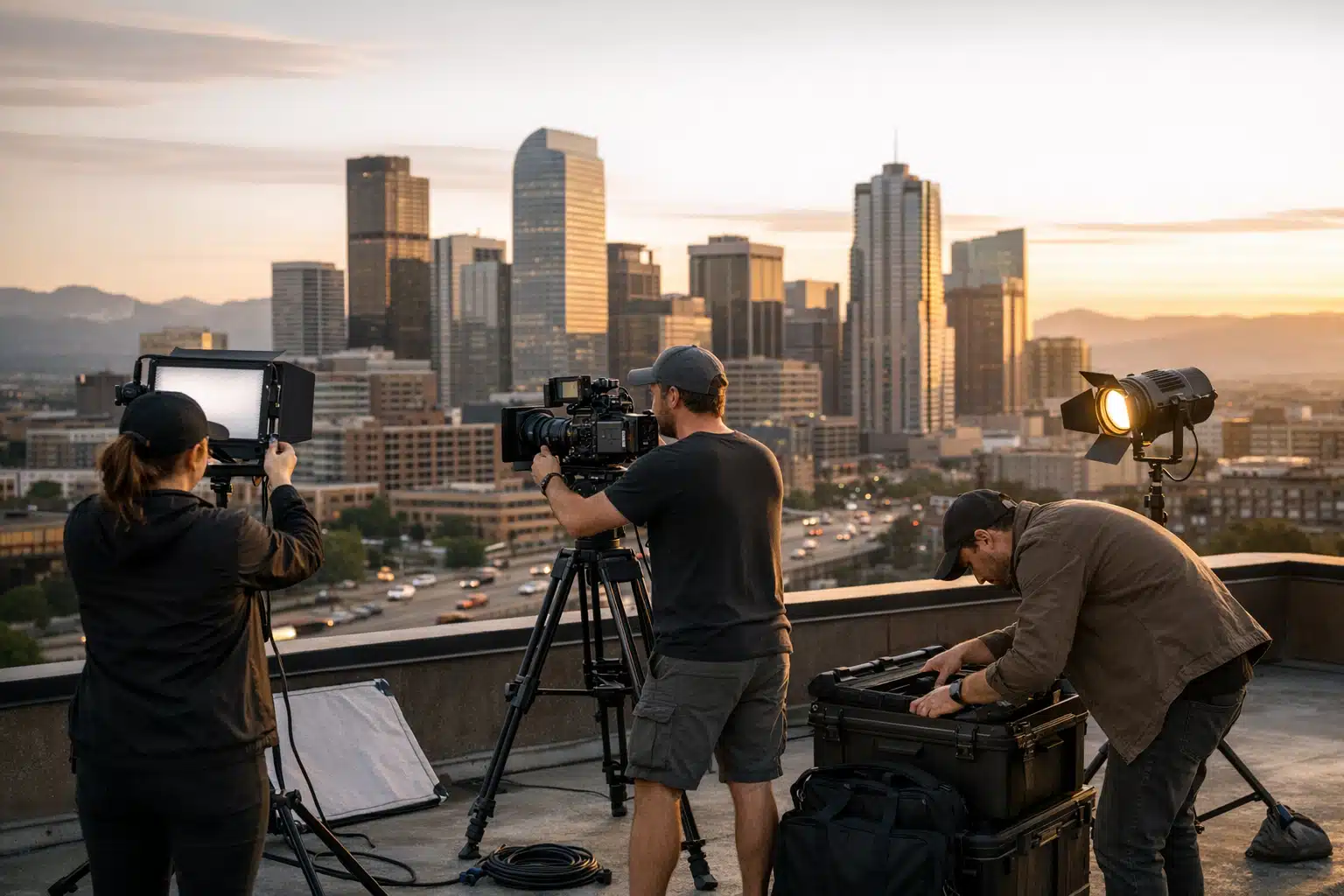
Expo Productions explains how Denver video production scheduling must account for local traffic patterns, with specific corridors and timing strategies to keep shoots on track.
- I-25 and I-70 experience heavy delays during morning and evening rush hours, while surface streets like Colorado Boulevard and Speer create bottlenecks between locations.
- The team recommends adding 45-minute buffers for peak-hour moves, confirming load-in access days ahead, and checking event calendars for Coors Field and Red Rocks before booking nearby shoots.
- Seasonal factors matter too - winter snow can double drive times, while summer events crowd streets, so crews adjust call times and sometimes stage gear on-site the night before.
Plan Denver video shoots by avoiding peak congestion times on I-25, typically between 7-9 a.m. and 4-6 p.m. on weekdays. Schedule early morning calls before rush hour or midday shoots between 10 a.m. and 3 p.m. for smoother crew movement. Factor in extra travel time when shooting in downtown areas or near major highway interchanges to keep production on track.
Denver added more than 100,000 residents to its metro roads in the past decade, and every one of them seems to hit I-25 at 5 p.m. For any video shoot, that matters. Denver video production scheduling succeeds or fails based on how a crew reads local traffic before the camera ever rolls.
A late crew burns golden-hour light. A late client burns their own budget. This post breaks down how we plan Denver shoots around real traffic patterns, with specific corridors, times, and tactics you can apply.
Why Denver Traffic Shapes Video Production Scheduling
Traffic considerations are not a side note in Denver. They decide whether your crew arrives with time to set up or scrambles to make a hard deadline.
A three-person crew hauling lighting kits, tripods, and audio cases cannot dart between lanes. Loading and unloading gear at a downtown location takes 20 to 30 minutes on its own.
Miss that window and you compress everything else. Interviews get rushed. B-roll gets skipped. The edit suffers before post-production begins.
The Corridors That Cause Most Delays
Certain Denver routes back up on predictable schedules. Knowing them lets us build shoot days that avoid the worst of it.
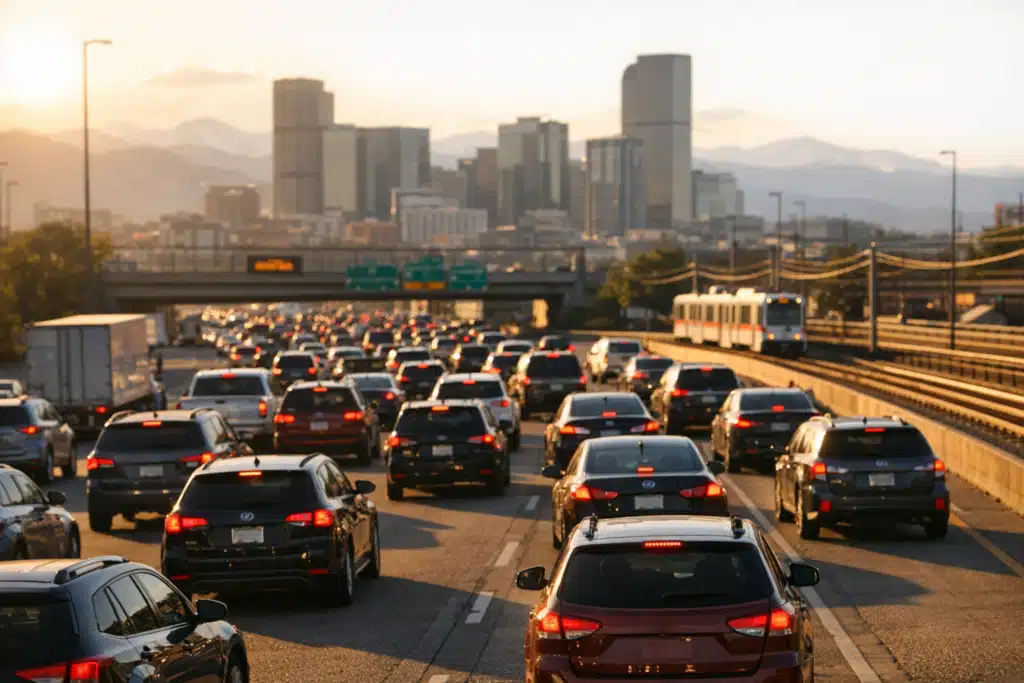
- I-25 through downtown: Heavy northbound from 4 to 6:30 p.m., southbound from 7 to 9 a.m.
- I-70 east toward DIA: Slows sharply during afternoon rush and any snow event.
- I-70 west toward the mountains: Weekend mornings clog by 7 a.m. as ski and hiking traffic climbs.
- Colorado Boulevard and Speer: Surface-street bottlenecks that trap crews between locations.
- US-36 to Boulder: Reverse commute fills up by mid-afternoon.
How to Build a Denver Video Production Schedule Around Traffic
Denver video production scheduling starts with the shoot’s fixed points. Sunrise, sunset, venue access, and client availability rarely move. Traffic must bend around them.
Here is the sequence our team follows when we lock a shoot date and call time.
- Set the creative anchor first. Golden hour on a rooftop or an interview during a slow office hour drives everything else.
- Map crew origin points. A grip driving from Aurora faces different delays than one leaving Wheat Ridge.
- Add a traffic buffer. We build in 45 minutes for any cross-town move during peak hours.
- Confirm load-in access. Downtown garages and event docks have their own timing rules.
- Schedule the hardest scene early. Front-load complex setups before fatigue and traffic stress compound.
A Real Example: A LoDo Restaurant Shoot
Say a client wants a brand video for a Lower Downtown restaurant. They want the dinner rush on camera and a chef interview before doors open.
We would arrive by 2:30 p.m. to beat the 4 p.m. I-25 crush. Load-in and lighting take until 4. The interview runs 4:30 to 5:15, before staff prep begins.
Then we shoot dinner-service B-roll from 6 to 8 p.m. The crew leaves after 8, when northbound I-25 has cleared. One traffic-aware call time protects the entire day.
Seasonal Timing That Denver Crews Plan For
Denver weather changes traffic as much as the clock does. A schedule that works in July fails in January.
Winter Shoots and Snow Delays
A single morning snow can turn a 20-minute drive into an hour. We push winter call times later when a storm is forecast, or stage gear on-site the night before.
Mountain-adjacent shoots near Golden or Morrison need extra caution. Red Rocks access roads ice early and clear late.
Summer Light and Event Congestion
Summer gives Denver long golden hours past 8 p.m. That is a gift for outdoor brand footage, but events crowd the streets.
Rockies games at Coors Field jam LoDo on game nights. A concert at Red Rocks fills C-470 and US-6. We check event calendars before setting any nearby shoot.
Load-In Realities Most Clients Underestimate
Getting a crew across town is only half the timing puzzle. Parking and gear access finish it.
Downtown Denver limits curbside loading. A permit or a coordinated dock time prevents a $75 ticket and a moved vehicle mid-shoot.
- Metered zones: Plan for meter feeding or a nearby garage with clearance for a cargo van.
- Event venues: Confirm the dock window in writing days ahead.
- Residential shoots: Check permit parking zones in neighborhoods like Wash Park and Capitol Hill.
- Office towers: Freight elevators require advance booking and a building contact.
Multi-Location Days: The Toughest Scheduling Test
Shoots that hit three or four Denver spots in one day demand tight traffic math. The order of stops decides whether you finish on time.
We route multi-location days to move against traffic flow. Start downtown early, work outward, and end in an outer suburb after rush thins.
Sample Route Logic
For a client with stops in RiNo, Cherry Creek, and the Tech Center, we would begin in RiNo at 8 a.m. Then move to Cherry Creek by late morning.
The Tech Center stop lands last, around 2 p.m. That avoids southbound I-25’s evening wall and keeps the crew productive all day.

 Posted on Google
DIY Filming vs. a Denver Crew That Knows the Roads
A phone can capture footage. It cannot read a traffic map, hold a load-in window, and protect golden hour at once.
A local crew builds these variables into the plan before day one. That difference shows up as footage you can use, shot on schedule.
When you hire a Denver team that films here weekly, you pay for judgment about timing, not just equipment.
Quick Checklist for Timing Your Denver Shoot
- Avoid I-25 and I-70 during 7–9 a.m. and 4–6:30 p.m. for cross-town moves.
- Check the Coors Field and Red Rocks calendars before booking nearby dates.
- Add a 45-minute buffer for any peak-hour location change.
- Confirm load-in and parking days ahead, not on the morning of.
- Watch the forecast and push winter call times when snow threatens.
Bring the Story Home on Schedule
Denver traffic will not slow down, but a smart plan works around it. Anchor the creative moments, buffer the drives, and respect load-in windows, and your shoot stays on time.
Expo Productions films across Denver and Colorado with these traffic considerations built into every schedule. Call or text us at 303‑775‑0248, email matthew@expoproductions.com, or visit https://expoproductions.com to plan your next shoot.
