
The Role of Lighting in Denver’s Indoor Video Productions
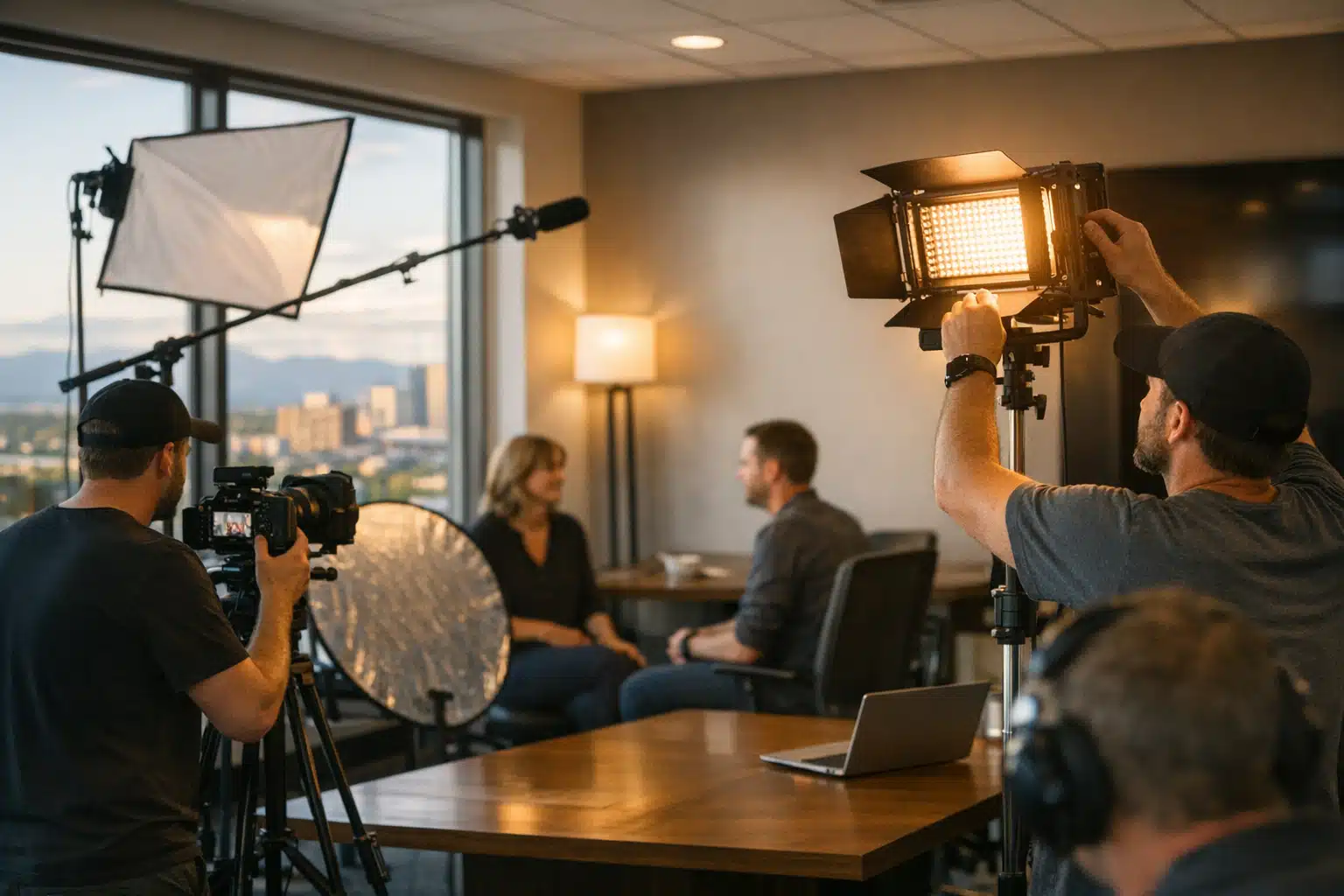
Denver's high altitude and intense sunlight create unique challenges for indoor video production, requiring careful planning to manage mixed light sources, fast weather changes, and harsh window glare.
- At 5,280 feet, Denver's thinner air produces harder and brighter daylight that overpowers indoor fixtures and creates color balance problems with warm overhead lights mixing with cool window light.
- A three-point lighting setup with key, fill, and back lights works well in Denver offices, and controlling windows with blackout curtains or ND gels helps maintain consistent footage.
- Professional lighting prevents amateur-looking results like uneven skin tones and dark backgrounds, while proper preparation - including scouting at shoot time and identifying power outlets - reduces setup time and costs.
Denver's 300 days of annual sunshine creates unique challenges for indoor video shoots. The strong high-altitude light streams through windows and competes with artificial lighting setups, making it difficult to achieve consistent exposure and color balance. Filmmakers must carefully control or block natural light while balancing their studio fixtures to create professional-quality footage.
Why Lighting Decides the Success of Indoor Video in Denver
Denver receives roughly 300 days of sunshine each year, which sounds like a gift for filmmakers. Indoors, it becomes a problem. Strong high-altitude light pours through office windows and fights every fixture you set up.
Indoor video lighting Denver shoots demand more planning than most business owners expect. The mile-high elevation, big storefront windows, and fast weather swings all change how a room looks on camera.
This post breaks down what makes local indoor lighting tricky. It gives you practical video production lighting tips you can apply before your next shoot.
What Makes Indoor Lighting in Denver Different
Denver sits at 5,280 feet, where thinner air scatters less sunlight. The result is harder, brighter, higher-contrast daylight than you get at sea level.
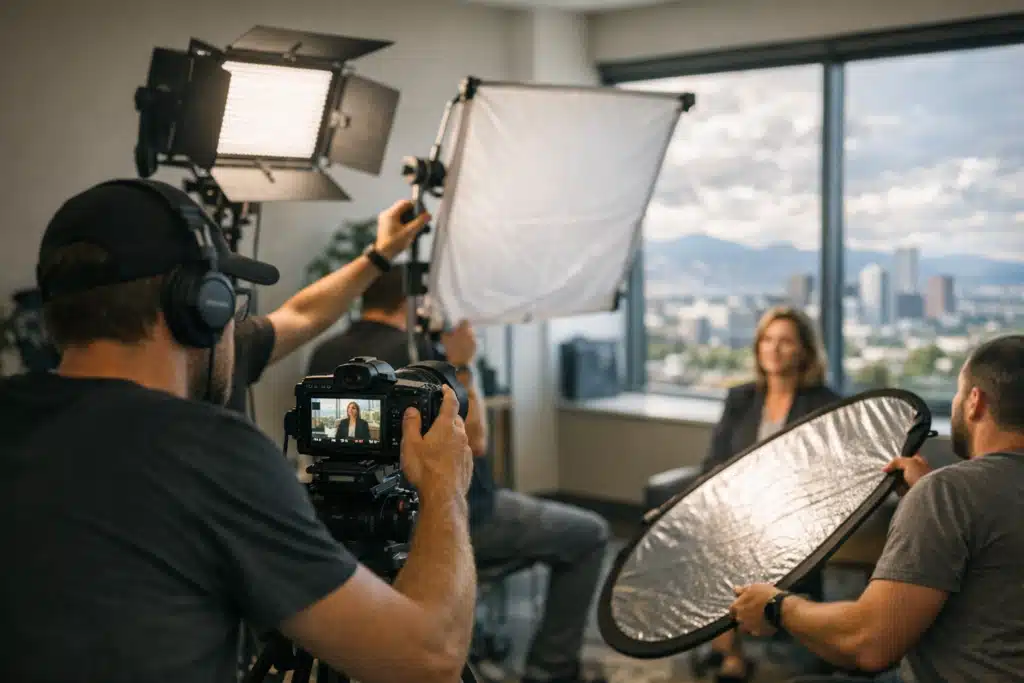
That daylight hits interiors with force. A conference room facing east at 9 a.m. can read three stops brighter near the window than at the back wall.
The Mixed Light Problem
Most Denver offices run warm LED or fluorescent overheads. Then daylight floods in cool and blue from the windows.
Your camera cannot balance both at once. Faces end up half orange, half blue, and skin tones suffer.
We fix this on nearly every corporate shoot. The first step is deciding which light source wins the room, then matching everything to it.
Fast Weather, Changing Light
A morning interview near a window can shift twice before lunch. Clouds roll off the Front Range and drop your exposure two stops in seconds.
Then the sun returns and blows out the background. This is why window-dependent lighting fails for long interviews.
Video Production Lighting Tips for Denver Interiors
Good indoor lighting starts before anyone turns on a camera. These steps keep your footage consistent from the first take to the last.
- Scout the room at your actual shoot time. A space at 2 p.m. looks nothing like it did during a 10 a.m. walkthrough.
- Control the windows first. Use blackout curtains, ND gels, or diffusion film to tame Denver’s harsh daylight.
- Pick one color temperature. Match your lights to either daylight (5600K) or tungsten (3200K), never both.
- Kill the overhead fluorescents. They cast green tints and ugly shadows under the eyes.
- Add a controllable key light. A softbox or LED panel gives you a light that weather cannot change.
Follow this order and your footage stays even. Skip it and post-production color work gets expensive.
The Three-Point Setup for Denver Offices
A three-point setup handles most interview and testimonial work. It works in cramped startup suites and open RiNo warehouse spaces alike.
- Key light: Your main source, placed at 45 degrees to the subject’s face.
- Fill light: A softer light that lifts shadows on the opposite side.
- Back light: A rim behind the subject that separates them from the wall.
In brick-heavy Denver interiors, the back light matters more than usual. Dark exposed brick swallows subjects without that separation.
Common Indoor Lighting Mistakes Denver Businesses Make
DIY video usually fails in predictable ways. Knowing the traps saves you a reshoot.
Filming Against a Window
Placing someone in front of a bright Denver window turns them into a silhouette. The camera exposes for the sky, and the face goes dark.
Turn the subject so the window lights their face instead. Or block it entirely and light them yourself.
Relying on Overhead Lights Alone
Ceiling lights point straight down. They create raccoon-eye shadows and flat, lifeless faces.
No amount of editing repairs badly positioned light. The camera needs directional light coming from the side.
Ignoring Reflections
Glass conference rooms and glossy monitors are everywhere in Denver’s LoDo office towers. Every light you add can bounce back into the lens.
We angle fixtures and flag reflections during setup. It takes minutes on site and saves hours in editing.
How We Handle Lighting on Denver Indoor Shoots
Our workflow adapts to the room, the season, and the light outside. Here is how a typical corporate interview goes.
Winter vs. Summer Setups
December sun sits low and cuts sharply across desks by mid-afternoon. We often add more diffusion in winter to soften that low angle.
June daylight is intense and lasts longer. We rely more on ND gels and blackout material to hold control across the day.
Working in Denver’s Older Buildings
Many Denver businesses film in converted warehouses and historic brick buildings. Power circuits in these spaces are limited and easy to overload.
We plan our draw before arrival and lean on LED fixtures. Modern LEDs run cool and pull far less power than old tungsten kits.
Matching Light to Brand
A law firm and a craft brewery need different moods. One wants clean and even; the other wants warm and textured.
Lighting sets that tone before a single word is spoken. It tells viewers how to feel about your business.

 Posted on Google
Professional Lighting vs. DIY: What It Costs You
You can film indoor video on a phone. The question is whether the result reflects your brand.
DIY footage usually shows its shortcuts in the lighting. Uneven skin tones, dark backgrounds, and color casts read as amateur.
Poor lighting undermines your message more than a shaky frame does. Viewers judge credibility in the first few seconds.
What You Pay For With a Denver Videographer
- Consistency: Footage that matches from clip to clip.
- Speed on site: A crew that lights a room fast and keeps your team on schedule.
- Problem solving: Fixes for glare, mixed light, and window issues in real time.
- Less editing cost: Clean footage needs far fewer correction hours.
The money spent on proper lighting shows up in every frame. It is the difference viewers notice without knowing why.
Preparing Your Space for an Indoor Video Shoot
To prepare a room for filming in Denver, follow these steps before the crew arrives.
- Clear clutter from behind and around the filming area.
- Note which windows get direct sun during your shoot time.
- Identify available power outlets and their locations.
- Ask building management about after-hours lighting controls.
- Turn off any flickering or buzzing overhead fixtures.
A prepared space cuts setup time and keeps costs down. It also gives the crew room to build proper light.
Making Indoor Denver Video Work for Your Brand
Lighting is the quiet force behind every strong indoor video. It controls mood, credibility, and how clearly your audience sees your message.
Denver’s bright, shifting daylight makes indoor lighting a skill worth hiring for. The right setup turns an ordinary office into a space that sells your story.
Expo Productions plans and lights indoor video shoots across the Denver metro. Call or text us at 303‑775‑0248, email matthew@expoproductions.com, or visit https://expoproductions.com to start your next project.
Sources
- National Weather Service – Denver/Boulder Forecast Office
- U.S. Department of Energy – LED Lighting
- National Institute of Standards and Technology – Sensor Science Division
