
10 Tips for Capturing the Perfect Denver Sunset in Your Videos
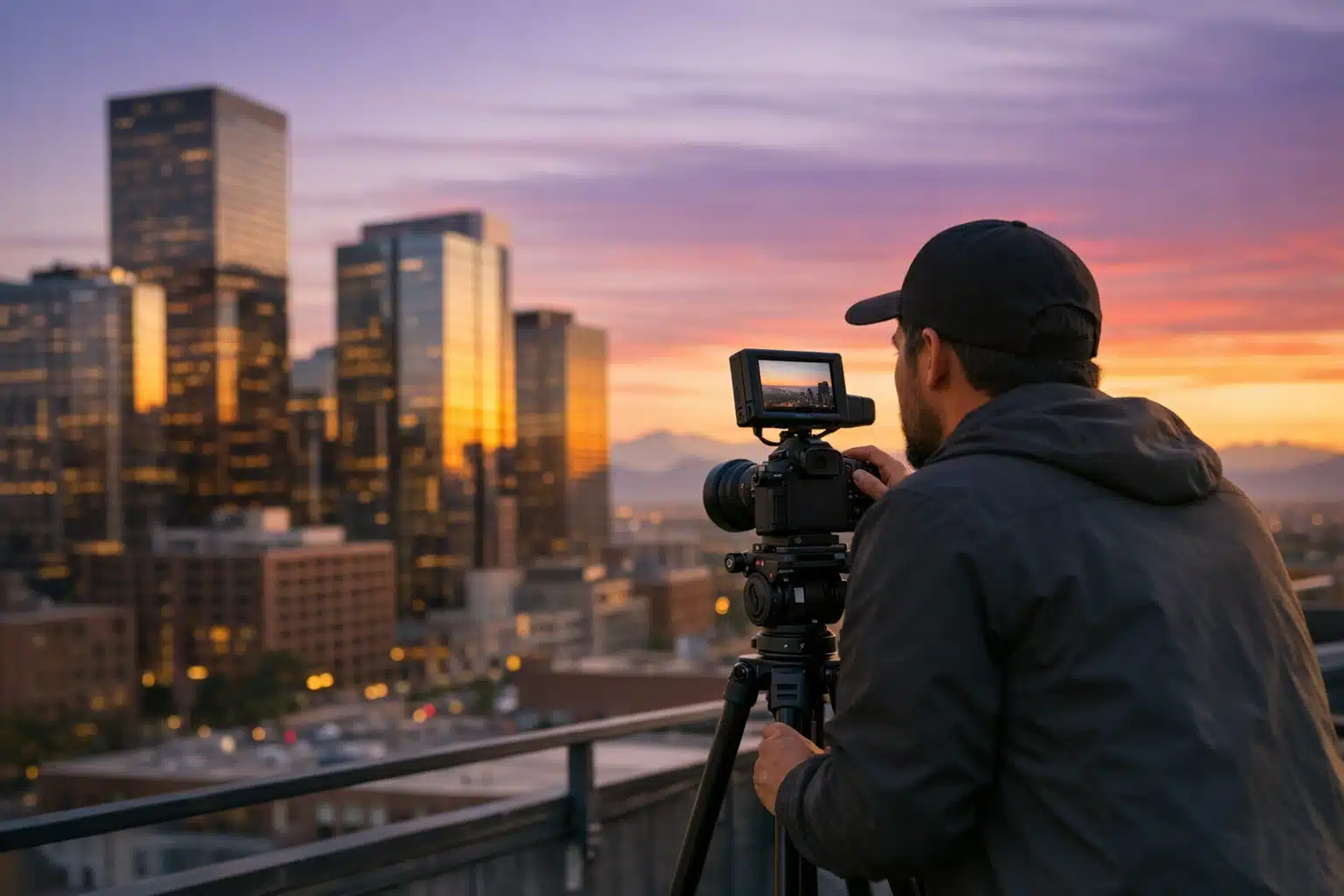
This guide from Expo Productions shares 10 practical techniques for filming sunset video in Denver, where the 5,280-foot elevation and mountain terrain create unique lighting conditions that require specific timing and camera strategies.
- Denver's high altitude produces more saturated colors and sharper gradients, but the Rockies block direct light 10 to 20 minutes before official sunset times. Arriving 45 minutes early and using sun-position apps helps capture the 8 to 12 minute peak color window.
- Exposing for the sky rather than the subject preserves the orange gradient, while ND filters maintain smooth motion. Summer thunderstorms that clear before sunset often create the most dramatic cloud-lit skies.
- Adding foreground motion like cyclists or cars creates depth, and staying for blue hour after sunset captures downtown with city lights against cool skies. Professional shoots protect against the no-retake reality of sunset timing.
Denver sits at 5,280 feet, where thinner air scatters light differently than at lower elevations. This high altitude creates a sharper orange-to-purple gradient in sunset footage compared to most other cities. The unique atmospheric conditions along the Front Range produce distinctive color transitions that make Colorado sunset videos stand apart from footage captured elsewhere.
Denver sits at 5,280 feet, and that altitude changes how sunsets look on camera. Thinner air scatters light differently, giving the Front Range a sharper orange-to-purple gradient than most cities record. These Denver sunset video tips come from years of filming across the metro area, and they focus on the specific lighting, weather, and locations that make Colorado footage stand apart.
Below are 10 practical techniques for capturing sunset video that looks intentional, not lucky. Each one applies whether you run a local brand, plan events, or shoot creative work along the Front Range.
Why Denver Sunset Video Tips Matter for Local Brands
Sunset footage sells a feeling of place. A Denver business that shows the Rockies glowing behind its storefront signals something no stock clip can fake: it belongs here.
Event planners use golden-hour B-roll to open recap videos. Real estate teams shoot balcony views at dusk. Restaurants film patios as the light drops behind the foothills.
The problem is timing. Denver’s sunset window moves fast, and the mountains block direct light earlier than a flat horizon would suggest. Miss the window and you get flat, gray footage instead of that Front Range fire.
The Mile-High Difference
Denver’s high elevation means stronger UV and less atmospheric haze on clear days. Colors read more saturated straight out of camera. But afternoon thunderstorms in July and August can wipe out a sunset in minutes, so scouting the forecast matters as much as scouting the location.
1. Plan Around Denver’s Real Golden Hour, Not the Clock
Golden hour in Denver ends when the sun drops behind the foothills, which happens before the “official” sunset time. West of I-25, the Rockies cut your usable light by 10 to 20 minutes.
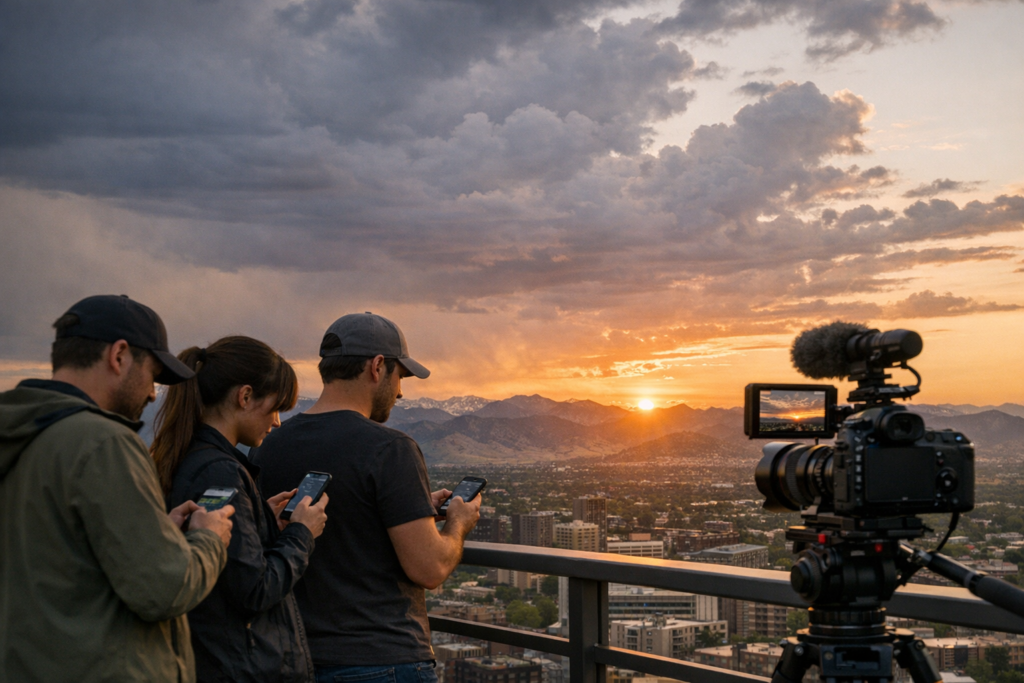
Check a sun-position app like PhotoPills for the exact angle. Point your shoot toward locations where the terrain lets low light reach your subject.
- Downtown east-facing shots catch warm light on glass towers longer.
- West-facing shots lose the sun earlier but get stronger silhouettes.
2. Arrive 45 Minutes Early to Lock Your Frame
The best sunset color lasts about 8 to 12 minutes in Denver. You cannot compose, expose, and refocus in that window if you show up cold.
Set up your tripod and framing during the blue-to-gold transition. When the color peaks, you press record and adjust exposure only.
A Simple Pre-Shoot Timeline
- 60 minutes out: Arrive, scout angles, check weather radar.
- 45 minutes out: Lock tripod, set base exposure.
- 20 minutes out: Capture establishing wide shots.
- Peak color: Roll on your hero shot.
- After the sun drops: Grab blue-hour details.
3. Shoot the Mountains as Your Backdrop, Not Your Subject
The Front Range makes a strong silhouette, but a flat mountain line gets boring fast. Frame a person, a building, or motion in the foreground and let the peaks anchor the background.
Ruby Hill Park, Sloan’s Lake, and the rooftops near LoDo give clean sightlines to the range without power lines cutting across the ridge.
4. Expose for the Sky, Recover the Shadows Later
Denver sunsets create extreme contrast between a bright sky and dark foreground. If you expose for your subject, the sky blows out and the color disappears.
Protect the highlights instead. Shoot in a flat picture profile or Log if your camera supports it. You recover shadow detail in the edit without losing that orange gradient.
Camera Settings That Hold Up
- ISO: Keep it low, around 100 to 400, to avoid noise in dark foregrounds.
- Shutter: Double your frame rate (1/48 at 24fps) for cinematic motion.
- ND filter: Use a variable ND to keep that shutter speed as light drops.
5. Use an ND Filter Even at Sunset
People assume filters are for bright midday shoots. But early in golden hour, Denver’s clear-sky light stays strong enough to force a fast shutter, which makes motion look choppy.
A variable ND lets you hold 1/48 shutter as the light fades. This is one of the outdoor videography tricks that separates smooth footage from stuttery clips.
6. Watch the Afternoon Storm Pattern in Summer
From June to August, Denver builds afternoon thunderstorms that often clear right before sunset. Those clearing clouds catch fire in ways a clear sky never will.
Track the radar. A storm that breaks up around 6:30 p.m. can hand you the best sky of the season 90 minutes later.
Clouds Are Your Friend
A completely clear Denver sky gives a clean but plain gradient. Scattered clouds catch pink and gold underlighting that adds depth. Aim for 30 to 50 percent cloud cover for the richest frames.

 Posted on Google
7. Add Foreground Motion for Depth
Static sunset shots read like photos. Motion tells the eye it is watching video and adds life to the frame.
- Cars crossing the Speer Boulevard bridges at dusk.
- Cyclists on the Cherry Creek Trail against the glow.
- A slow gimbal push past a subject with the range behind.
Even a light breeze moving grass at Wash Park gives you the movement flat footage lacks.
8. Capture Blue Hour, Not Just Sunset
The 20 minutes after the sun drops give Denver a deep blue sky with city lights coming alive. Downtown looks its best during this window.
Do not pack up when the orange fades. Blue hour footage of the skyline, with warm window lights against cool sky, often outperforms the sunset itself for brand videos.
9. Match Your Location to Your Brand Story
Where you shoot signals who you are. A tech company reads differently at a downtown rooftop than a wellness studio filmed at Red Rocks at dusk.
Location Ideas by Goal
- Skyline authority: Rooftops near Union Station or the Highland pedestrian bridge.
- Outdoor lifestyle: Sloan’s Lake or Bear Creek Lake Park.
- Dramatic scale: Lookout Mountain above Golden for a full metro view.
Check permit rules before filming. Denver Parks and Recreation requires permits for commercial shoots on public land.
10. Know When DIY Ends and a Pro Shoot Begins
A phone can grab a decent sunset clip for social media. But brand videos need exposure control, stabilization, and color grading that hold up on a client’s homepage.
Here is the honest difference:
- DIY: Fast, free, fine for a quick Instagram story.
- Pro shoot: Multiple angles, backup for weather, cinema-grade color, and a plan for the 10-minute window.
Sunset shoots leave no room for retakes. When the light is gone, it is gone until tomorrow. A crew that scouts, times, and grades the footage protects that one shot at the color.
Bringing It Together for Your Denver Sunset Video
The best Denver sunset footage comes from timing the mountain-shortened golden hour, protecting your highlights, and adding foreground motion for depth. Watch the summer storm pattern and stay for blue hour, because Denver’s after-glow rivals the sunset itself.
Want sunset footage that makes your brand look like it belongs in Colorado? Expo Productions plans, films, and grades outdoor video across the Denver metro. Call or text 303‑775‑0248, email matthew@expoproductions.com, or visit https://expoproductions.com to start your project.
Sources
- National Weather Service – Denver/Boulder Forecast Office
- Denver Parks and Recreation – Permits and Filming
- Wikipedia – Denver
