
How to Plan a Successful Video Testimonial Campaign in Denver

Denver businesses can build trust and drive sales with video testimonial campaigns featuring real customers filmed in recognizable local settings. This guide from Expo Productions walks through planning, filming, and distributing effective customer story videos.
- Start by selecting three to five clients who achieved measurable results and can speak with warmth and specifics about their experience.
- Film in meaningful Denver locations during golden hour to avoid harsh shadows and plan around afternoon summer storms that typically arrive between 2 and 5 p.m.
- Send subjects open-ended questions ahead of time rather than scripts and cut each interview into multiple pieces including a hero video and short social clips.
To plan a successful video testimonial campaign, start by identifying your best customers who have strong stories to share. Set clear goals for what you want the videos to achieve, then create a simple interview framework with open-ended questions. Choose authentic locations, keep production professional but natural, and distribute the finished videos across your website, social media, and email marketing channels.
Denver businesses spend thousands on ads that strangers scroll past in seconds. A single video testimonial campaign changes that math, because a real customer talking about your work earns trust no banner ad can match. This post walks Denver business owners, event planners, and creative teams step by step on how to plan one that feels real and drives sales.
Video marketing demand across the Front Range keeps climbing as local buyers search YouTube and Google before calling any company. The right Denver customer stories, filmed in the right setting, give those searchers a reason to pick you.
Why a Video Testimonial Campaign Works for Denver Brands
A video testimonial is a short film where a real client describes the problem you solved and the result they got. It earns trust faster than written reviews because viewers see facial expressions, hear tone, and read body language.
Denver buyers lean local. A testimonial shot at a recognizable spot—a Larimer Square storefront, a RiNo warehouse, or a Wash Park home—signals that your customers live and work here too.
Three reasons Denver companies invest in testimonial video:
- Buyer trust: Prospects believe peers over polished ad copy.
- Search visibility: Video keeps visitors on your page longer, which helps rankings.
- Sales enablement: Your team sends clips during the closing conversation.
Step One: Pick the Right Customers to Feature
Start with clients who got measurable results. A roofing company might choose a homeowner whose claim closed in 10 days instead of 60.
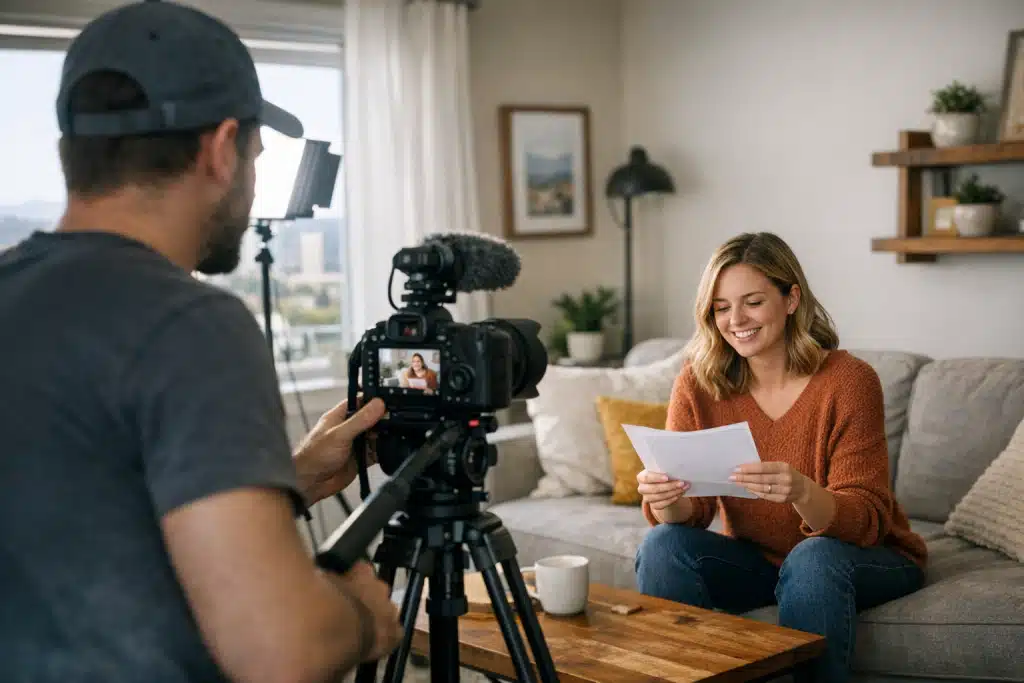
Choose people who speak with warmth and specifics. A客户 who says “they saved us $14,000” beats one who says “they were great.”
How to shortlist your best candidates
- Pull your highest-rated reviews from the last 12 months.
- Flag clients with a clear before-and-after story.
- Note anyone whose location or face would recognize your brand.
- Confirm they are comfortable on camera before you book a crew.
Aim for three to five subjects in a first campaign. That gives you enough footage to edit a hero video plus shorter social cuts.
Step Two: Choose Denver Settings That Tell the Story
Location does half the storytelling work. Film where the story happened, not against a blank studio wall.
A café owner should talk inside their shop during the morning rush. A landscaper should stand in the backyard they rebuilt.
Denver locations that add meaning
- The client’s own space: office, home, jobsite, or retail floor.
- Outdoor Front Range backdrops: foothills, city skyline, or a mountain-view rooftop.
- Neighborhood markers: RiNo murals, Union Station, or a familiar Main Street.
Plan around Colorado light and weather
Denver gets roughly 300 sunny days a year, but that sun moves fast and burns harsh at altitude. Harsh noon light creates raccoon-eye shadows on faces.
Shoot outdoor interviews in the first two hours after sunrise or the last two before sunset. That window gives soft, flattering light.
Afternoon thunderstorms roll in during summer, usually between 2 and 5 p.m. Book outdoor segments in the morning to avoid rain delays.
Winter gives crisp blue skies and snow-capped peaks, but cold shortens shoot days and drains batteries fast. A good crew packs backups and keeps subjects warm between takes.
Step Three: Prepare Your Clients Before the Shoot
Nervous, unprepared subjects produce stiff footage. Preparation keeps answers specific and relaxed.
Send questions, not a script
Scripted testimonials sound fake on camera. Instead, send five to seven open questions a week ahead.
Good prompts pull out real moments:
- What problem were you dealing with before you called us?
- What worried you about hiring someone?
- What surprised you most about working together?
- What result mattered most to you?
- Who would you recommend us to, and why?
Coach for conversation, not performance
Ask subjects to answer in full sentences that restate the question. “The biggest result was…” works better than “Yeah, it was good.”
Tell them one fact up front: nobody nails it on the first take, and editing fixes the stumbles.
Step Four: Decide Between DIY and a Denver Video Crew
A phone can capture a quick clip, but it limits what a campaign can do. Here is an honest comparison.
DIY smartphone filming
- Cost: near zero.
- Limits: weak audio, shaky framing, flat lighting.
- Best for: internal use or a single casual clip.
A hired Denver video crew
- Cost: most local testimonial shoots run between $2,500 and $8,000 depending on subjects, locations, and edit count.
- Includes: multi-camera setups, lavalier mics, controlled lighting, and color grading.
- Best for: homepage videos, paid ads, and sales decks.
Audio sells the trust. Viewers forgive imperfect visuals faster than muddy sound, and clean audio needs real microphones.

One of the things I appreciated most about Matthew was how completely unobtrusive he was throughout the entire day. I honestly barely knew he was there! Somehow, he managed to capture all of the important moments without ever making us feel like there was a camera in our faces. He worked seamlessly with our photographer and they made such a great team.
Matthew also has an incredible eye. Our finished wedding video is absolutely beautiful. He didn’t just capture our ceremony and reception…he captured the emotion, the energy and most importantly, the love in the room. Watching it truly feels like getting to experience our wedding day all over again.
We are so grateful Matthew was there to capture such an important day for us. We will treasure our video forever and cannot recommend him highly enough!
 Posted on Google
Step Five: Plan the Production Day
A tight schedule keeps costs down and subjects comfortable. Pack similar locations and times together.
A sample Denver shoot schedule
- 7:00 a.m. Crew sets up at the first client’s office during soft morning light.
- 8:00 a.m. First interview, 30 minutes of questions for 90 seconds of final footage.
- 9:30 a.m. Capture b-roll of the client at work.
- 11:00 a.m. Travel to a second subject across town.
- 2:00 p.m. Wrap indoor interviews before afternoon storms.
Budget 30 to 45 minutes of interview time per person. That extra footage gives the editor room to find the strongest lines.
Capture b-roll that matches the words
B-roll is supporting footage layered over the interview audio. When a bakery owner mentions early mornings, show flour, ovens, and sunrise through the window.
Strong b-roll turns a talking head into a short story. Plan a shot list before the crew arrives.
Step Six: Edit and Distribute Your Denver Customer Stories
One shoot should produce several deliverables. Smart editing stretches your budget across months of content.
From a single interview, request:
- One 60 to 90 second hero video for your homepage.
- Three to four 15 to 30 second vertical clips for Instagram and TikTok.
- One quote graphic pulled from a standout line.
Where to post for Denver reach
Put the hero video on your homepage and your Google Business Profile. Local searchers see it when they look up your company.
Run short vertical cuts as geo-targeted ads across Denver metro zip codes. Tag the neighborhood in captions so locals feel the connection.
Common Mistakes Denver Businesses Make
Avoid these and your first campaign will outperform most competitors.
- Filming at harsh noon: wait for golden hour outdoors.
- Over-scripting subjects: real words beat rehearsed lines.
- Ignoring audio: invest in good microphones first.
- One giant video only: cut short versions for social feeds.
- Forgetting releases: get written permission to use each person’s footage.
Bringing It Together
A strong video testimonial campaign starts with the right clients, real Denver settings, and preparation that keeps subjects relaxed. Film during soft light, invest in clean audio, and cut one shoot into many pieces.
Expo Productions films Denver customer stories that sound real and look sharp across the Front Range. Call or text us at 303‑775‑0248, email matthew@expoproductions.com, or visit https://expoproductions.com to plan your campaign.
Sources
- National Weather Service – Denver/Boulder Forecast Office
- Visit Denver – Denver Facts and Climate
- Google – Video Advertising and Marketing Trends
