
The Essential Checklist for Filming Events in Denver
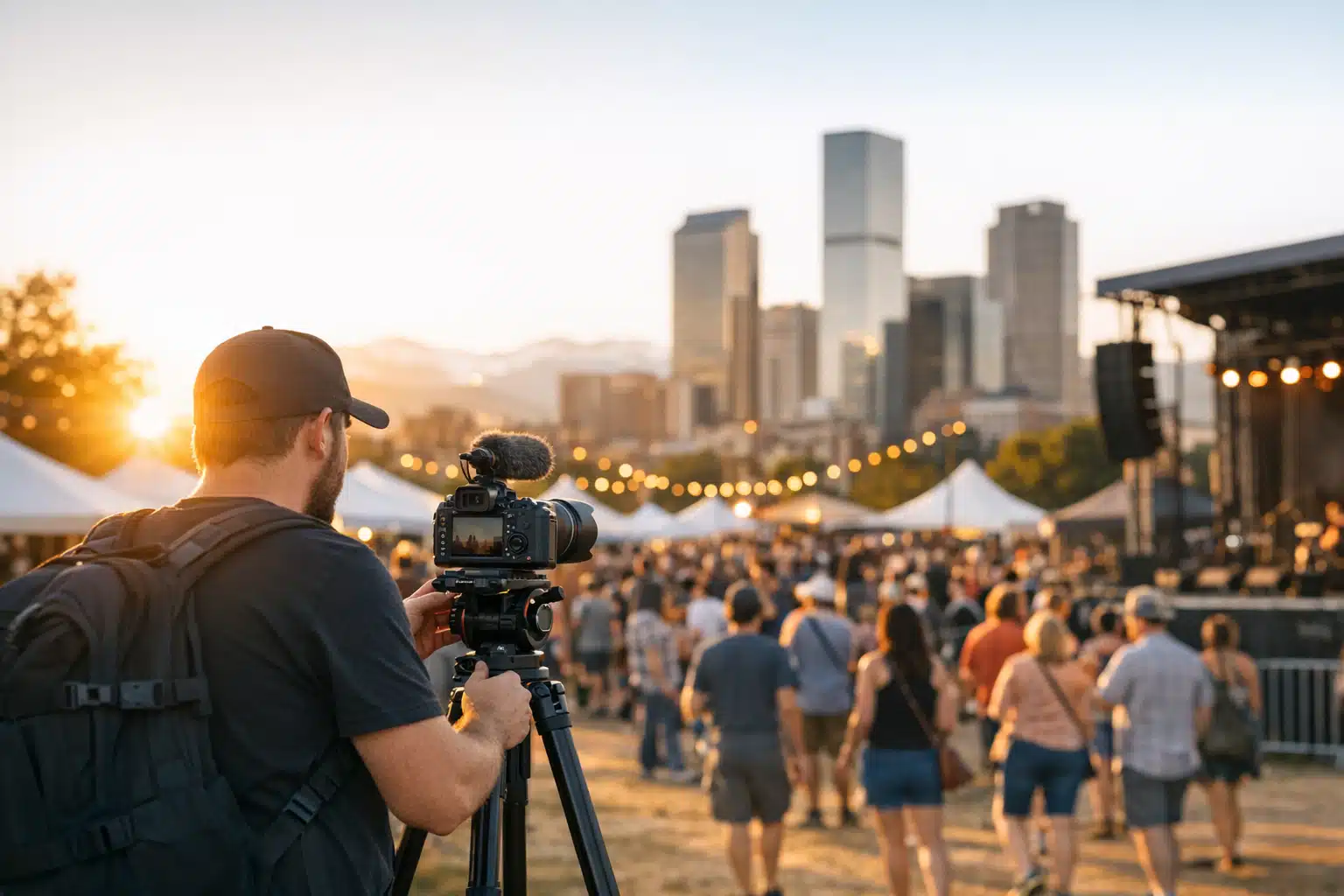
Denver event filming requires specific preparation due to altitude, intense sunlight, sudden weather changes, and mixed lighting conditions. This checklist covers permits, audio setup, battery management, shot planning, and gear tailored to Colorado venues.
- Apply for Denver Film Office permits at least two weeks early and confirm venue rules for tripods, lighting, and drones in writing. Fire marshals enforce clear exit paths for camera placement.
- Schedule outdoor shots 60 to 90 minutes before sunset to avoid harsh midday light and plan covered backups for summer afternoon storms between 2 and 5 p.m.
- Carry double the batteries needed since cold air and altitude drain power faster. Record to dual card slots and back up footage to two drives before leaving the venue.
A complete checklist for filming events in Denver includes securing location permits, scouting venues for lighting and acoustics, preparing backup equipment for unpredictable mountain weather, coordinating with event organizers on schedules, and checking power access points. You should also account for altitude adjustments that can affect battery life and plan for both indoor convention spaces and outdoor settings.
Why Event Filming in Denver Requires Its Own Playbook
Denver hosts more than 80 conventions annually at the Colorado Convention Center alone. Add corporate galas, mountain weddings, and outdoor festivals, and the demand for video coverage keeps climbing.
An event filming checklist built for Denver conditions saves you from mistakes that generic advice misses. Altitude, sudden weather shifts, and mixed indoor-outdoor lighting all affect how footage turns out.
This post walks you room-by-room through what a Denver event shoot demands. You get a practical event filming checklist you can hand to any videographer or planner before the doors open.
The Complete Event Filming Checklist for Denver Shoots
Use the sections below as a running list. Each one reflects a real problem crews face at Denver events, from Larimer Square rooftops to Red Rocks amphitheater.
1. Lock Down Permits and Venue Rules Early
Denver requires filming permits for many public spaces, including parks and city streets. Skipping this step can shut down your shoot mid-event.
- Public parks and streets: Apply through the Denver Film Office at least two weeks out.
- Private venues: Confirm the venue allows tripods, lighting rigs, and drone use in writing.
- Convention Center events: Check load-in windows and union labor rules before booking crew.
- Drone flights: Verify FAA airspace restrictions, since much of downtown sits near flight paths.
Ask every venue one question: where can crew place cameras without blocking exits? Fire marshals in Denver enforce clear egress paths.
2. Plan Around Denver’s Light and Weather
Denver averages 300 sunny days a year, but that sunlight is intense at 5,280 feet. Harsh midday light blows out faces at outdoor Denver events without diffusion.
- Golden hour timing: Schedule key outdoor shots 60 to 90 minutes before sunset.
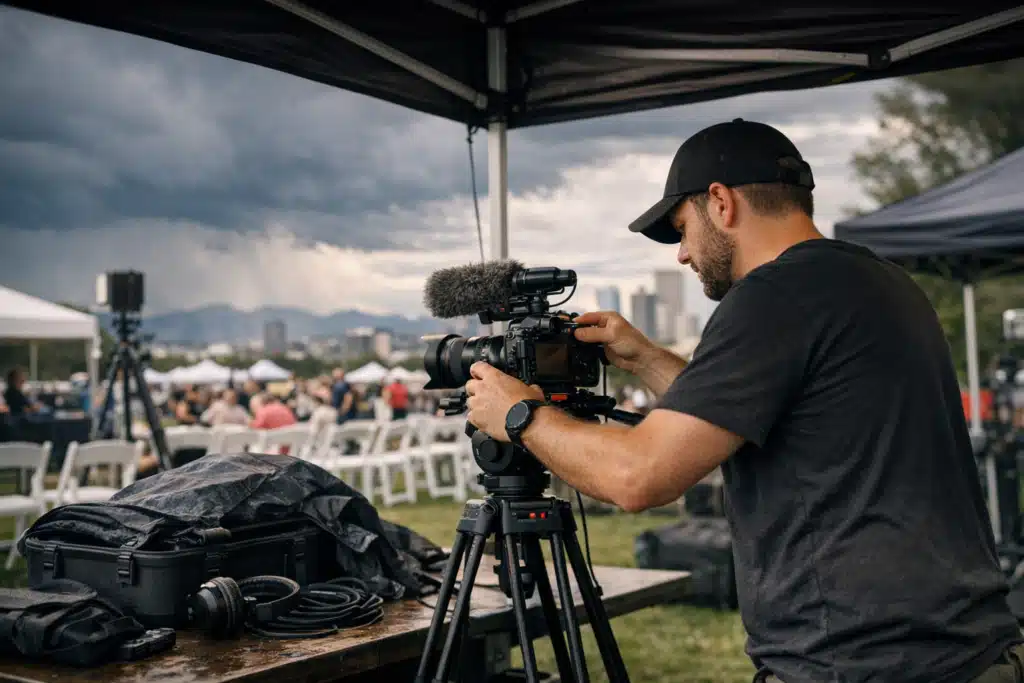
- Afternoon storms: Summer brings pop-up thunderstorms, usually between 2 and 5 p.m. Build a covered backup plan.
- Snow glare: Winter shoots need neutral density filters to control reflected light off snow.
- Mixed lighting: Tents and atriums combine daylight and tungsten. Set white balance per camera, not globally.
A rooftop shoot at a RiNo venue looks different at 3 p.m. versus 6 p.m. Scout the same time of day you plan to film.
3. Prepare Your Audio Setup
Bad audio ruins more event videos than bad footage. Denver ballrooms and open-air venues each create different sound problems.
- Feed audio directly from the venue soundboard when speakers use the house PA.
- Run a lavalier mic on the main presenter as backup.
- Place a shotgun mic near the stage for room ambiance.
- Test wireless frequencies on-site, since large events crowd the spectrum.
Outdoor festivals near the mountains bring wind. Pack foam and fur windscreens for every external mic.
4. Solve Power and Battery Life at Altitude
Cameras and batteries drain faster in cold Colorado air. A January shoot at a mountain lodge can cut battery runtime by a third.
- Carry double the batteries you think you need.
- Keep spares in an inside jacket pocket to hold warmth.
- Confirm venue outlet locations during your walkthrough.
- Bring gaff tape to secure cables across walkways and prevent trip hazards.
For long galas, use V-mount battery systems on main cameras. They outlast internal packs across a four-hour dinner.
5. Build a Shot List Tied to the Run of Show
A shot list matched to the event timeline keeps crew focused. Request the run of show from the planner one week before.
Mark the non-negotiable moments first. For a corporate awards night, that means the keynote, award handoffs, and the closing toast.
- Establishing shots: Venue exterior, signage, arriving guests.
- Key moments: Speeches, ceremonies, product reveals.
- B-roll: Crowd reactions, table details, candid conversations.
- Interviews: Attendee soundbites captured in a quiet side room.
6. Assign Camera Coverage and Crew Roles
One camera cannot cover a live event without missing moments. Match crew size to the event scale and budget.
Single Camera vs Multi-Camera Coverage
A single operator works for small workshops and intimate ceremonies. Two or three cameras suit stage events where you cannot repeat a moment.
- Camera A: Locked wide shot on the stage.
- Camera B: Roaming operator for tight shots and reactions.
- Camera C: Fixed medium shot for cutaways.
Sync all cameras to a common timecode. This saves hours in editing when you cut between angles.
7. Pack a Denver-Specific Gear Bag
Colorado conditions call for items city crews sometimes forget. Build your kit around real venue scenarios.
- Neutral density filters for bright high-altitude sun.
- Rain covers for summer afternoon storms.
- Hand warmers to protect batteries at winter shoots.
- A monopod for tight convention aisles where tripods block traffic.
- Extra XLR cables for pulling clean soundboard feeds.
8. Confirm Backup and Data Handling
Losing event footage means losing a moment that never repeats. Record to dual card slots whenever your camera supports it.
- Format all cards before the event, never mid-shoot.
- Back up footage to two drives before leaving the venue.
- Label cards by camera and time block.
- Keep one backup copy off-site within 24 hours.
Professional Videography vs DIY Filming for Denver Events
A smartphone captures a moment. It rarely captures a corporate event in a way that helps your brand.
DIY filming struggles with three things: clean audio, stage lighting, and multi-angle coverage. A trained crew handles all three at once.
What You Get With a Trained Crew
- Reliable audio pulled straight from the venue board.
- Multiple angles synced for a polished edit.
- Backup systems that protect one-time moments.
- Local knowledge of Denver permits and venues.
For a marketing recap video, that difference decides whether viewers watch past ten seconds. Clean footage builds trust in your brand.

 Posted on Google
What Event Video Costs in Denver
Event video pricing in Denver varies with crew size, hours, and deliverables. A single-camera half-day recap sits at the lower end.
- Small events: One operator, edited highlight reel.
- Mid-size events: Two cameras, soundboard audio, same-week edit.
- Large productions: Three-plus cameras, live switching, multiple deliverables.
Ask any videographer what the quote includes. Editing hours, revisions, and music licensing all affect the final number.
Putting the Checklist to Work
A strong event video starts long before the cameras roll. Permits, weather planning, audio prep, and backups decide the result more than any single piece of equipment.
Run this event filming checklist before your next shoot, and you avoid the mistakes that catch first-time planners at Denver events.
Expo Productions films corporate galas, conferences, and outdoor events across Colorado. To plan your next event video, call or text 303‑775‑0248, email matthew@expoproductions.com, or visit https://expoproductions.com.
Sources
- City of Denver – Denver Film Office and Permitting
- National Weather Service – Denver/Boulder Forecast Office
- Federal Aviation Administration – Drone and UAS Regulations
