
How to Ensure Your Video Project Stays on Schedule
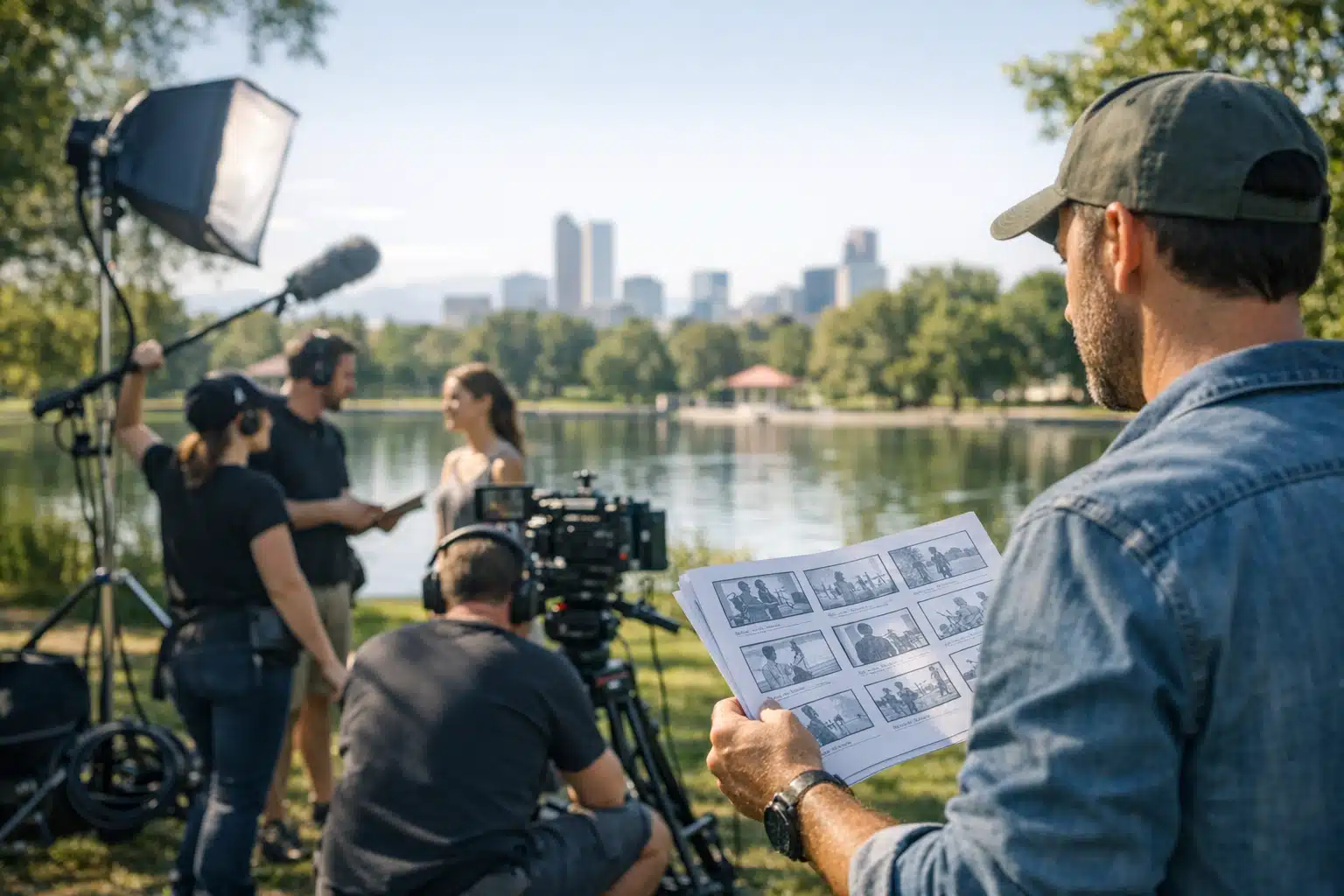
A clear video production timeline helps Denver businesses manage outdoor shoots where weather, permits, and seasonal light changes create scheduling challenges. Expo Productions outlines a four-phase approach to keep projects on track from concept to final delivery.
- Pre-production and post-production each take about 40% of the timeline, with a two-minute brand video typically needing six weeks total. Permits for Denver locations like Washington Park may require two weeks of lead time.
- Common delays include late permits, weather without backup days, scope creep, slow approvals, and missing brand assets. Holding one backup date for outdoor shoots helps prevent weather-related setbacks.
- For event videos with tight turnarounds, teams should approve edit style beforehand, set up on-site footage transfer, and designate a single approver to enable 48-hour delivery of highlight reels.
To keep a video production project on schedule, build a realistic timeline that accounts for competing factors like weather, permits, and talent availability. Start by identifying your busiest production windows and potential conflicts early. Create buffer time for outdoor shoots, secure locations and crew in advance, and maintain clear communication with all stakeholders throughout the process.
Denver books more outdoor shoots between May and September than any other stretch of the year, and that seasonal crunch is where deadlines slip. A clear video production timeline keeps your project moving when weather, permits, and talent schedules all compete for the same dates. This post shows Denver businesses and event planners how to build a schedule that holds up under real conditions.
Why a Video Production Timeline Matters for Denver Projects
A video production timeline is a dated plan that maps every stage of your project from concept to final file. It assigns owners, deadlines, and dependencies to each task.
Denver adds variables most cities do not face. Afternoon thunderstorms roll in fast during summer. Snow can close a mountain location in October. Golden-hour light shifts by nearly two hours between June and December.
Without a schedule that accounts for local conditions, projects stall. A missed permit window at Red Rocks or a snowed-out shoot day at Mount Falcon can push delivery back weeks.
Good scheduling protects three things: your launch date, your budget, and your creative vision.
The Four Phases of a Video Production Timeline
Every video project runs on four phases. Knowing how long each takes helps you set honest deadlines.
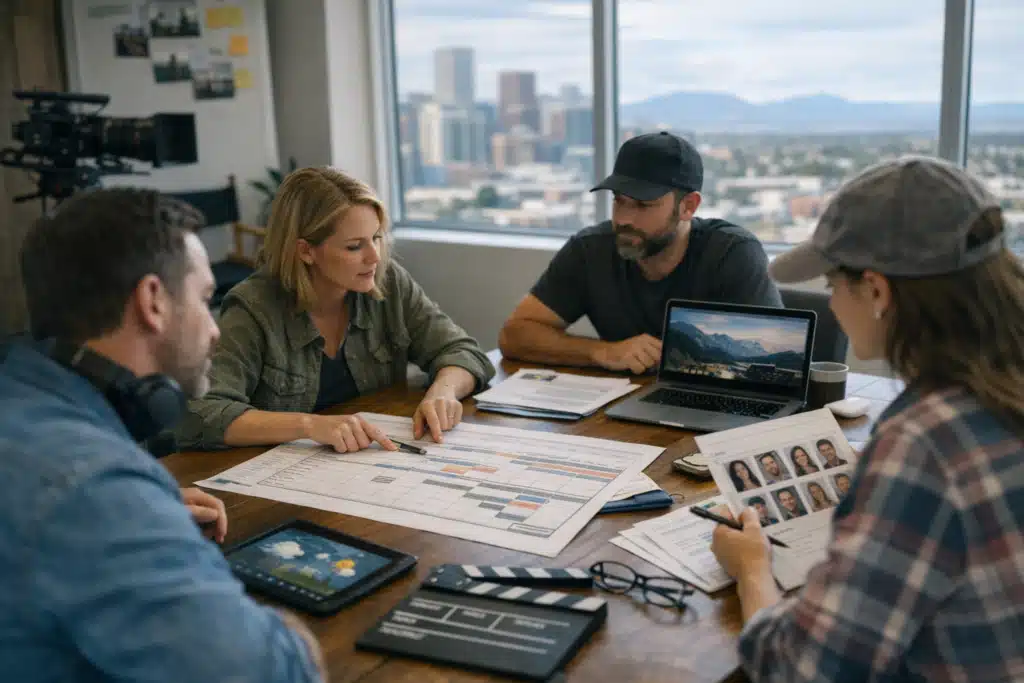
1. Pre-Production: 40% of Your Timeline
Pre-production is the planning stage. It covers scripting, storyboarding, location scouting, casting, and scheduling.
Most Denver clients underestimate this phase. A two-minute brand video usually needs one to two weeks of prep before anyone films.
Pre-production tasks include:
- Locking the script and shot list
- Securing location permits for public spaces
- Booking talent, crew, and equipment
- Confirming backup dates for weather
- Building a call sheet with exact times and addresses
Denver-specific note: permits for spots like Washington Park or the 16th Street Mall require lead time. Some city applications ask for two weeks minimum.
2. Production: The Shoot Days
Production is the filming stage. This phase is short but the most sensitive to schedule risk.
A single-day corporate shoot in Denver runs eight to ten hours. Multi-location days, like a business shooting at RiNo and then LoDo, need travel buffers built in.
Book shoots around Denver light. Summer golden hour lands near 8 p.m. Winter golden hour hits closer to 4 p.m. Interviews and B-roll should match your target look.
3. Post-Production: 40% of Your Timeline
Post-production covers editing, color grading, sound mixing, and graphics. It takes as long as pre-production for most projects.
A polished two-minute video needs two to three weeks in edit. That includes a first draft, one round of client notes, and a final pass.
4. Delivery and Review
Delivery is the handoff stage. Build in time for feedback rounds and file exports in every format you need.
Rushed reviews create rushed revisions. Give stakeholders a firm window to respond, usually three to five business days per round.
How to Build a Video Production Timeline That Holds
To keep your Denver video project on schedule, follow these steps in order.
- Start from your deadline and work backward. If your video launches at a September event, count back through delivery, post, shoot, and prep.
- Add weather buffer days. For any outdoor Denver shoot, hold one backup date. Summer storms and spring snow do not respect call sheets.
- Lock creative decisions early. Script and concept changes after filming are the top cause of blown deadlines.
- Limit feedback rounds. Two rounds of edits keep most projects on track. Open-ended revisions do not.
- Confirm every booking in writing. Talent, locations, and crew should all have signed dates.
Sample timeline for a two-minute Denver brand video:
- Weeks 1–2: Pre-production and permits
- Week 3: Filming, plus a backup day
- Weeks 4–5: Editing and first draft
- Week 6: Client review and final delivery
That six-week window is realistic. Anything shorter needs a larger crew or tighter scope.
Project Management Tools That Keep Video on Track
Strong project management is what separates a smooth shoot from a scramble. The right systems catch problems before they cost days.
Use a shared production calendar. Everyone on the crew should see call times, locations, and contacts in one place.
Send a call sheet 48 hours out. It lists arrival times, parking, weather forecast, and a point of contact. In Denver, add notes on downtown parking and mountain drive times.
Assign one project lead. A single owner tracking dependencies prevents the confusion that stalls multi-vendor shoots.
Common Reasons Denver Video Projects Fall Behind
Most delays trace back to a handful of avoidable causes.
- Late permits for public parks and streets
- Unscheduled weather with no backup day held
- Scope creep when new requests arrive mid-project
- Slow approvals when too many people review edits
- Missing assets like logos, fonts, or brand colors
Gather brand files before editing starts. Hunting for a vector logo mid-edit wastes a full afternoon.

 Posted on Google
Professional Videography vs DIY: The Schedule Difference
DIY filming looks faster on paper. In practice, it stretches timelines when problems surface without an experienced team.
A trained crew reads Denver light, adapts to a sudden storm, and reshoots on the spot. Solo shooters lose days recovering from mistakes they catch too late.
What a video partner brings to your schedule:
- Location and permit knowledge across Denver metro
- Backup equipment on set, no rental runs mid-shoot
- Edit workflows that hit deadlines predictably
- Weather judgment built from local shoot history
The time saved usually outweighs the cost difference, especially for event and campaign deadlines that cannot move.
Keeping Event Videos on a Tight Turnaround
Event video runs on fixed dates that never slide. A Denver conference or product launch happens once, and the schedule must match.
For same-week highlight reels, plan the edit before the event. Lock music, graphics, and structure in advance so editing starts the moment footage lands.
For fast event turnarounds:
- Approve the edit style before the event
- Set up transfer stations to pull footage on site
- Reserve editor time immediately after the shoot
- Agree on a single approver for quick sign-off
This planning lets a highlight reel go live within 48 hours of an event ending.
Conclusion
A dependable video production timeline works backward from your deadline, holds weather buffers, and limits feedback rounds. Strong project management and local Denver knowledge keep every phase moving toward launch.
Expo Productions plans, films, and edits video projects across Denver with schedules built to hold. Call or text 303‑775‑0248, email matthew@expoproductions.com, or visit https://expoproductions.com to start your project.
Sources
- Denver Parks & Recreation – Permits and Rentals
- National Weather Service – Denver/Boulder Forecast Office
- U.S. Bureau of Labor Statistics – Film and Video Editors and Camera Operators
