
How to Film Stunning Winter Wedding Videos in Denver
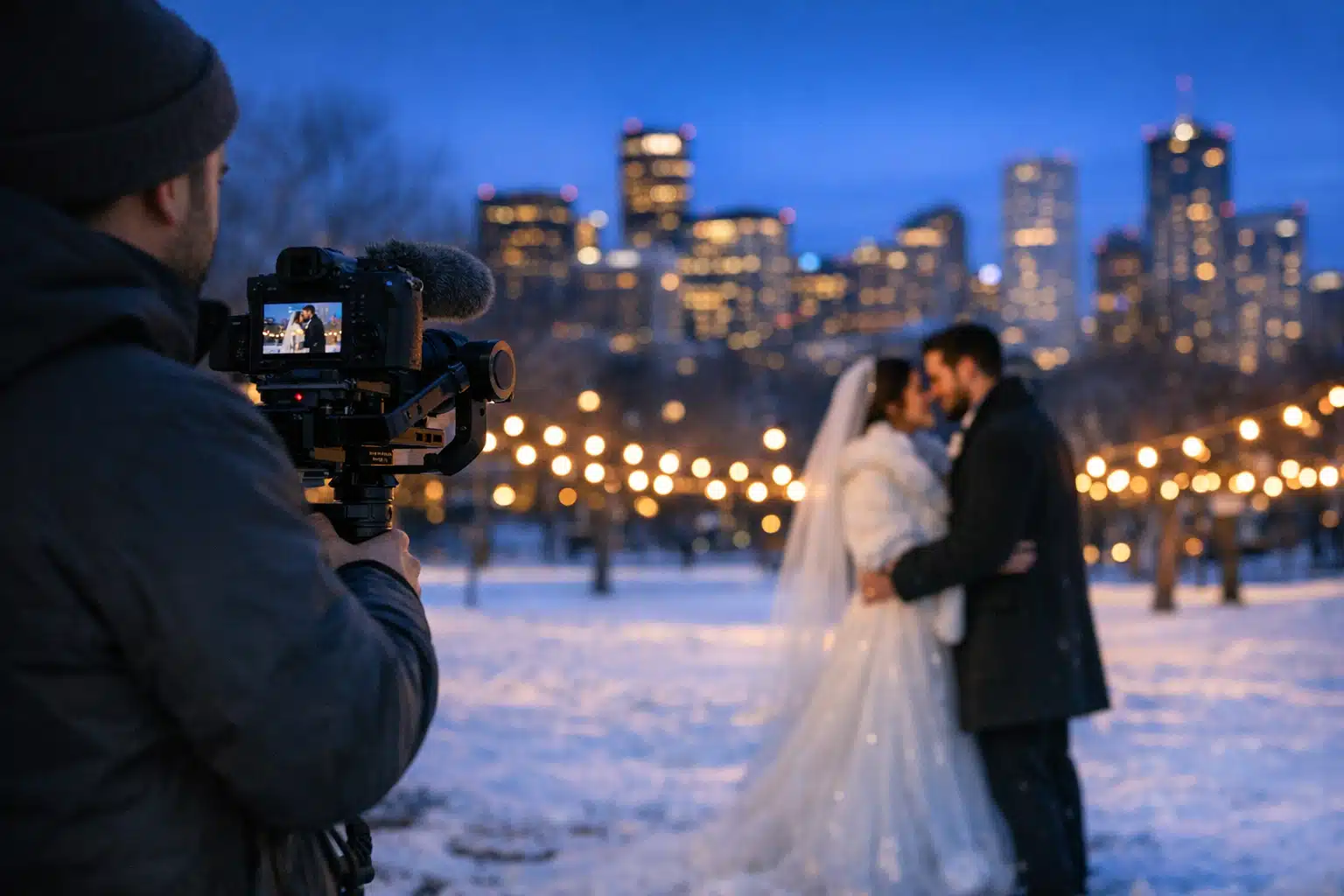
Expo Productions shares techniques for filming winter wedding videos in Denver, covering light timing, snow exposure, equipment protection, and location selection based on their Front Range experience.
- Denver winter daylight is short with sunset around 4:40 p.m. in late December. Blue hour from 4:45 to 5:15 p.m. offers cinematic contrast with snow and city lights.
- Snow tricks camera meters into underexposing faces. Overexpose by one to two stops and use a histogram to keep snow white while protecting skin tones.
- Cold drains batteries fast and causes lens fog when moving indoors. Carry triple the batteries in warm pockets and seal cameras in zip bags before entering heated spaces.
Filming winter wedding videos in Denver requires adapting to fast-dropping light and cold color shifts during the city's 300 sunny days. Snow reflects light in ways that can fool camera sensors, so manual exposure adjustments are necessary. Sub-freezing temperatures also affect equipment performance, meaning batteries drain faster and LCD screens may lag, requiring extra preparation and backup gear.
Denver averages about 300 sunny days a year, but winter light here drops fast and shifts cold. That combination makes winter wedding videos in Denver both rewarding and technically demanding. Snow reflects light in ways that fool cameras, and sub-freezing temperatures change how your equipment behaves.
This post breaks down the filming techniques, timing choices, and location picks that separate flat winter footage from footage that holds its color and depth. Every tip comes from shooting weddings across the Front Range in January and February cold.
Why Winter Wedding Videos in Denver Require a Different Playbook
Winter weddings in Colorado run on compressed daylight. In late December, the sun sets around 4:40 p.m. in Denver. Ceremony and portrait windows shrink to a few usable hours.
Snow also changes exposure math. Bright white fields trick camera meters into underexposing faces, leaving couples dark and gray.
Cold affects hardware too. Batteries drain faster below freezing, and lenses fog when you walk from a cold car into a warm reception hall.
Key takeaway: Denver winter footage fails for three reasons: bad light timing, blown snow exposure, and cold-shocked equipment. Each one is preventable.
How Denver’s Winter Light Shapes Your Shooting Schedule
Winter sun sits low on the horizon all day in Colorado. That low angle creates long shadows and warm side light, which flatters faces when you time it right.
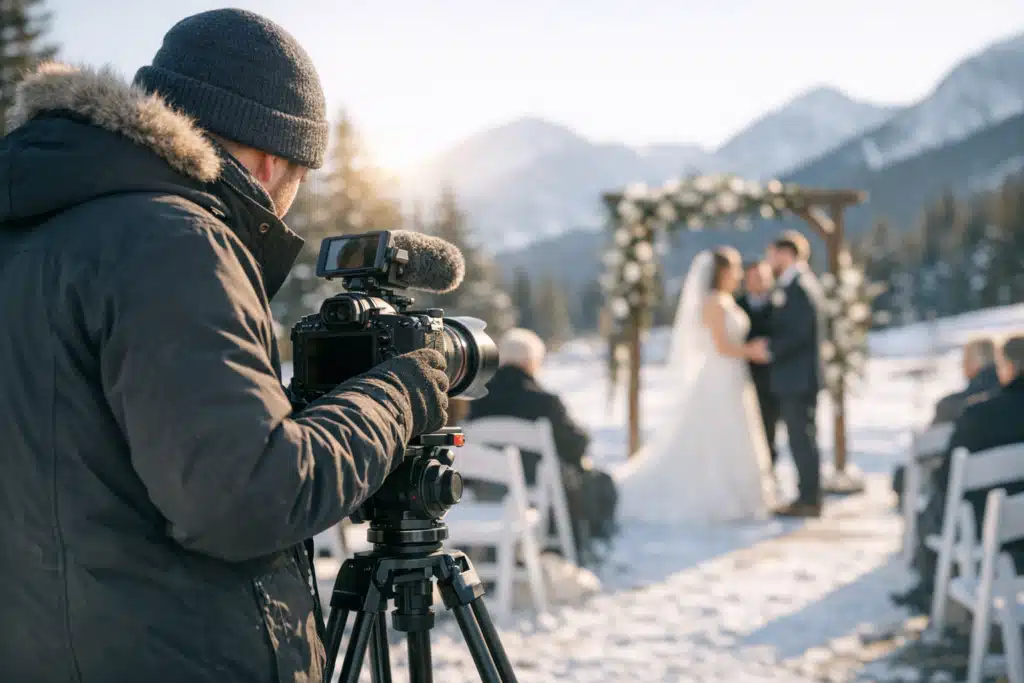
The Blue Hour Advantage
Blue hour in Denver winter runs roughly 4:45 to 5:15 p.m. The sky turns deep cobalt against snow and city lights.
Film couple portraits in this window for cinematic cold-weather contrast. Warm string lights or venue windows pop against the blue background.
Flat Overcast Days
Gray snowstorm days give you soft, even light with no harsh shadows. Skin tones look clean, but footage can feel lifeless without added color.
Add a warm practical light near the couple on overcast days. A single tungsten-balanced source separates them from the white backdrop.
A Simple Winter Timeline
- Noon to 2 p.m.: Getting-ready footage indoors near large windows.
- 2 to 3:30 p.m.: Ceremony during peak usable daylight.
- 3:30 to 4:30 p.m.: Golden, low-angle portraits outdoors.
- 4:45 to 5:15 p.m.: Blue hour couple shots with venue lights.
- After 5:15 p.m.: Reception coverage with controlled interior lighting.
Exposing Snow Correctly for Winter Wedding Videos
Snow is the biggest exposure trap in Denver winter filming. Camera meters read bright scenes as overexposed and darken everything.
The fix is deliberate overexposure. Push your exposure up about one to two stops so snow reads white, not gray.
Practical Settings That Work
- Use a histogram, not the meter. Let snow highlights sit near the right edge without clipping.
- Shoot in log or flat profiles. This holds detail in both snow and shadowed faces.
- Add an ND filter outdoors. Bright snow midday forces tiny apertures that kill background blur.
- White balance to the cold. Set 5600K or higher, then warm it slightly in the edit.
Takeaway: Expose for the couple’s faces first. Protect snow highlights second with your histogram.
Scenic Denver Winter Locations for Wedding Films
Denver and the surrounding foothills give you dramatic snow backdrops within a short drive. Each spot carries its own permit rules and light conditions.
Mountain and Foothill Settings
- Red Rocks area: Red sandstone against snow creates bold color contrast on clear days.
- Evergreen and Genesee: Pine forests and frozen lakes sit 30 minutes from downtown.
- Mount Falcon Park: Open ridgelines frame wide snow vistas behind the couple.
Urban Winter Backdrops
- Union Station: Warm interior light and historic architecture work during cold afternoons.
- Larimer Square: Overhead string lights read beautifully at blue hour.
- Denver Botanic Gardens: Winter light displays give colorful foreground sparkle.
Check park permit requirements before scheduling. Jefferson County and Denver Mountain Parks each have filming rules for commercial crews.
Protecting Your Camera Equipment in Colorado Cold
Cold weather breaks shoots when crews are unprepared. Front Range temperatures can swing from single digits to the 40s in one afternoon.
Battery and Hardware Prep
- Carry triple the batteries. Lithium cells lose up to half their runtime in freezing air.
- Keep spares in interior pockets. Body heat keeps them warm until swap time.
- Use hand warmers in bags. Tuck them near battery compartments, not against sensors.
Preventing Lens Fog
Fog happens when cold glass meets warm indoor air. The moisture condenses instantly and ruins reception footage.
- Seal cameras in zip bags before entering warm buildings.
- Let the sealed gear reach room temperature slowly.
- Unpack only after condensation stops forming on the bag.
Takeaway: Plan a 20-minute temperature buffer between outdoor and indoor shots.

 Posted on Google
Professional Denver Wedding Videography vs. DIY Winter Filming
Winter conditions widen the gap between hired crews and DIY attempts. A dropped exposure or frozen battery during a one-time ceremony cannot be reshot.
What a Hired Crew Handles That DIY Misses
- Backup cameras and power running at all times during the ceremony.
- Snow exposure control dialed in before the first shot.
- Audio protection from wind that cold Front Range gusts create.
- Fast relocation between shrinking daylight windows.
What Denver Wedding Videography Usually Costs
Full-day wedding video coverage in the Denver metro ranges widely by scope. Many couples budget between $3,000 and $8,000 for multi-camera coverage with an edited film.
Winter shoots can add cost for extra crew warmth, backup equipment, and tighter scheduling. Ask any videographer how they handle cold-weather contingencies before booking.
Audio and Movement in Cold Conditions
Wind ruins outdoor ceremony audio faster than any other winter problem. Even light Front Range breezes create low-frequency rumble.
- Use foam and fur windscreens on every outdoor microphone.
- Place a lavalier on the officiant as a protected backup source.
- Record a safety track at lower levels for loud vow moments.
Gimbal operators should test movement in cold too. Lubricants thicken in freezing air, so warm the gimbal before smooth tracking shots.
Editing Winter Footage for Mood and Warmth
Winter footage can skew too cold and blue in the edit. The goal is a crisp look that still feels inviting.
- Balance cool snow against warm skin tones. Keep faces warm even on gray days.
- Protect snow highlights during color grading to avoid clipped white patches.
- Add subtle film grain for texture in flat overcast scenes.
Pair the edit with music that matches the cold-weather mood. A slower score suits snow-covered Denver settings.
Conclusion
Filming winter wedding videos in Denver comes down to three things: timing shots around short, low-angle daylight, exposing snow correctly, and protecting equipment from the cold. Get those right and Colorado winter becomes your best backdrop instead of your biggest obstacle.
Expo Productions films weddings across Denver and the Front Range in every season. Call or text us at 303‑775‑0248, email matthew@expoproductions.com, or visit https://expoproductions.com to plan your winter wedding film.
Sources
- National Weather Service – Denver/Boulder Forecast Office
- City and County of Denver – Denver Mountain Parks
- Jefferson County, Colorado – Open Space Film Permits
