
How to Secure Permits for Filming in Denver’s Public Spaces
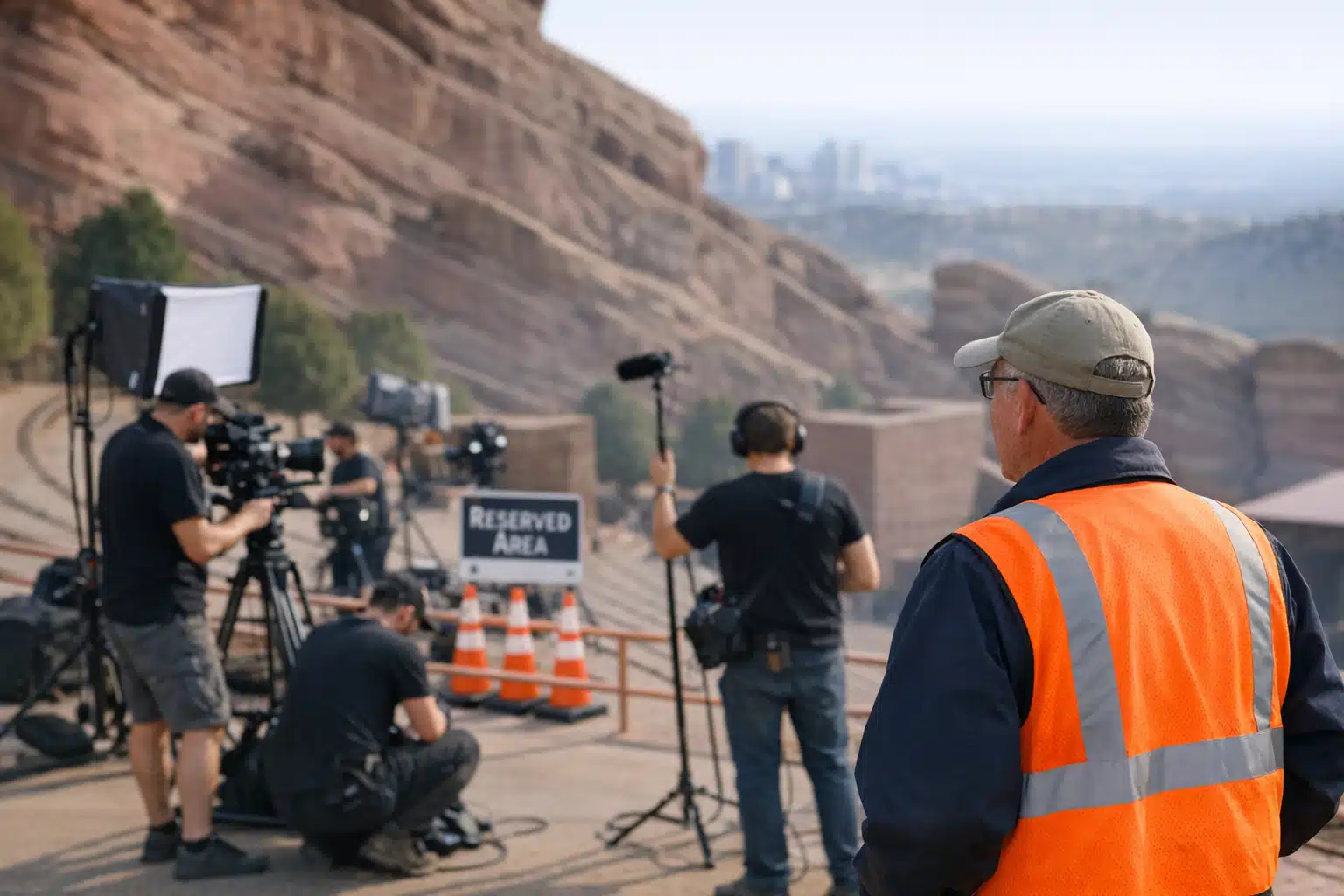
Expo Productions explains how to secure film permits for Denver's public spaces, covering jurisdiction requirements, application steps, insurance needs, and location-specific tips for video shoots.
- Denver requires permits for shoots in parks, on streets, or with crews of six or more people, and applications should be submitted at least two weeks in advance. Different offices handle permits depending on location - city streets go through the Office of Special Events while parks require Denver Parks & Recreation approval.
- Applicants must provide detailed shoot information, proof of at least $1 million liability insurance naming the city as additional insured, and pay fees that vary based on location and production scale. Extra approvals are needed for drones, generators, street closures, or amplified sound.
- Denver averages 300 sunny days yearly but altitude creates harsh midday light, so exterior shoots work best during golden hours. Summer afternoon storms and winter weather swings require backup plans.
To secure filming permits in Denver's public spaces, submit your application at least two weeks before your planned shoot date. Contact the Denver Film Commission or relevant city department for locations like Red Rocks, Washington Park, or 16th Street Mall. Provide details about your production, crew size, equipment, and shooting schedule. Having proper permits prevents fines and production shutdowns.
Denver issues film permits for shoots on city streets, parks, and public property, and most require applications submitted at least two weeks in advance. If you’re planning a video shoot at Red Rocks, Washington Park, or along the 16th Street Mall, you need the right paperwork before your crew arrives. Securing Denver filming permits protects your production from fines, shutdowns, and rescheduling headaches that can wreck a tight shooting schedule.
This post walks you step-by-step through Denver’s permit requirements for public spaces. As a Denver video production team, we’ve filed these applications, worked with city film offices, and shot in nearly every public location the metro area offers.
Why Denver Filming Permits Matter for Your Video Shoot
A permit gives you legal authority to film on public property. Without one, park rangers or police can stop your shoot on the spot.
Denver has grown into a busy production market. Local businesses, breweries, and event organizers now compete for the same scenic locations, from City Park to the Highlands neighborhood.
Permits do more than keep you compliant. They reserve your location, block conflicting bookings, and often unlock access to power hookups or parking control.
Skipping a permit carries real risk. A stopped shoot means paying your crew for wasted hours and rebooking talent, equipment, and locations at premium rates.
When You Actually Need a Permit
Not every shoot requires one. Denver draws a clear line based on location, crew size, and equipment footprint.
You need a permit for public space video production in these situations:
- Filming in Denver parks, including Cheesman, Washington, and City Park
- Shooting on city streets or sidewalks that require lane or pedestrian control
- Using tripods, lighting rigs, or dollies that block public paths
- Bringing a crew of six or more people
- Any commercial shoot generating revenue or promoting a brand
A solo creator shooting handheld B-roll on a public sidewalk usually needs no permit. The moment you add crew, equipment, or commercial intent, the rules change.
How to Secure Denver Filming Permits: Step-by-Step
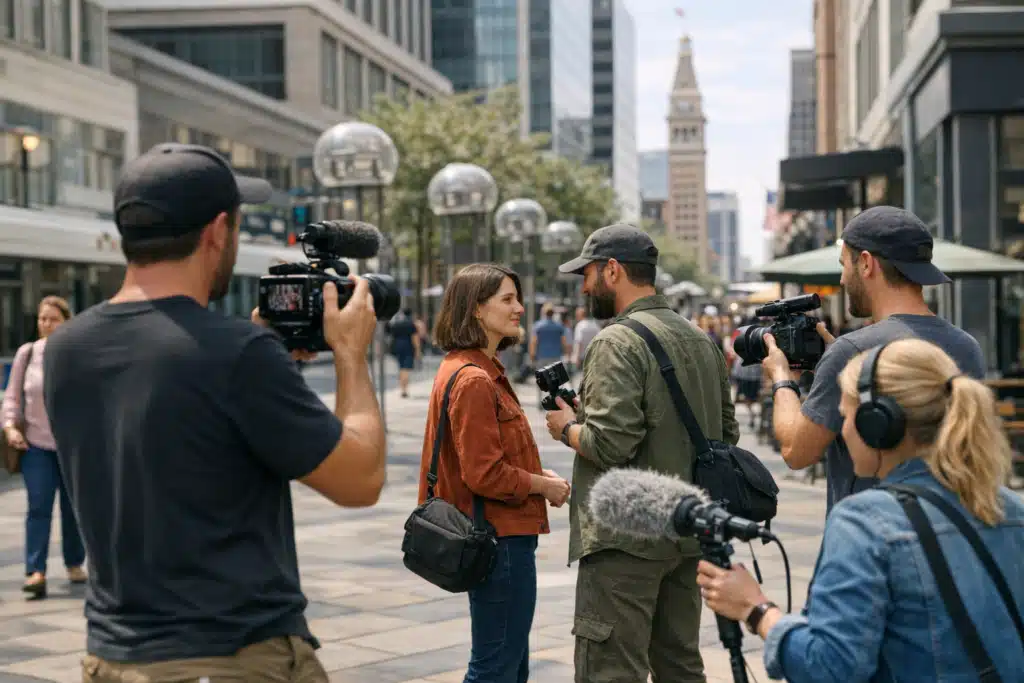
Denver routes film permitting through the Denver Office of Special Events and, for parks, through Denver Parks & Recreation. The right office depends on your location.
Step 1: Identify Your Filming Location and Jurisdiction
Pin down your exact address or park name first. Jurisdiction determines which office handles your application.
- City streets and sidewalks: Denver Office of Special Events
- City parks: Denver Parks & Recreation film permit office
- Red Rocks Amphitheatre: a separate Denver Arts & Venues application
- State parks like Chatfield: Colorado Parks & Wildlife, not the city
Filming near a border, such as a park that touches a state highway, may require two permits. Confirm this early to avoid a last-minute scramble.
Step 2: Submit Your Application Early
Denver recommends applying at least two weeks before your shoot date. Larger productions with street closures need more lead time.
Your application asks for specific details:
- Shoot dates and hours, including setup and teardown
- Exact location and desired footprint
- Crew size and vehicle count
- Equipment list, including drones, generators, and lighting
- Whether you need parking spaces reserved or lanes closed
Vague applications get delayed. A detailed footprint and clear timeline move your permit through faster.
Step 3: Provide Proof of Insurance
Denver requires general liability insurance for most permitted shoots. The city usually asks for coverage of at least $1 million per occurrence.
You must name the City and County of Denver as an additional insured. Your insurer provides this certificate, so request it well before your deadline.
Larger productions or shoots involving pyrotechnics, vehicles, or stunts may face higher coverage requirements. Ask the film office about your specific setup.
Step 4: Pay Your Permit Fees
Denver permit fees vary by location and production scale. Base application fees start modestly, but add-ons increase the total.
Common cost drivers include:
- Park usage fees charged per day
- Reserved parking spaces at metered rate replacement
- Police or traffic control officers for street closures
- Facility staff for after-hours access
A small brand shoot in a park might run a few hundred dollars. A commercial with lane closures and off-duty officers climbs into the thousands.
Step 5: Confirm Add-On Approvals
Certain elements need extra sign-off beyond the base permit. Plan for these early.
- Drones: FAA Part 107 compliance plus Denver airspace rules near DIA
- Generators and open flame: fire department review
- Street closures: Denver Public Works coordination
- Amplified sound: a noise variance in residential zones
Drone flights near downtown or the airport carry tight restrictions. Confirm your flight zone against FAA maps before promising aerial footage to a client.
Denver Location Notes Every Producer Should Know
Each public space carries its own quirks. Knowing them ahead of time saves your shoot day.
Red Rocks and Mountain Parks
Red Rocks Amphitheatre runs its own permitting under Denver Arts & Venues. Availability depends on the concert calendar, so book far in advance.
The venue sits at 6,450 feet. Crews arriving from lower elevations should pace physical work and plan for thinner air during setup.
City Park and Downtown
City Park offers skyline and mountain backdrops in a single frame. Weekend mornings fill with runners and events, so weekday early calls give cleaner shots.
The 16th Street Mall involves pedestrian and transit coordination. Shooting during off-peak hours reduces the control staff you need to hire.
Seasonal Light and Weather Planning
Denver averages around 300 sunny days a year, but altitude sharpens the midday sun. Harsh overhead light between 11 a.m. and 2 p.m. flattens outdoor footage.
Schedule exterior shoots for the golden hours after sunrise or before sunset. Winter shoots face short daylight windows and sudden weather swings off the Front Range.
Afternoon summer storms roll in fast. Build a weather buffer and an indoor backup into any July or August shoot day.
Professional Videography vs DIY Permitting
You can file Denver film permits yourself. Many small businesses do for simple shoots.
The paperwork gets heavier with crew size, street control, and insurance requirements. A missed insurance clause or wrong jurisdiction can void your permit hours before call time.
A production team handles permitting as part of the job. That means:
- Correct jurisdiction filing on the first try
- Insurance certificates already on file with the city
- Relationships with film office staff who flag issues early
- Backup location plans if a permit falls
For a one-camera interview in a park, DIY works fine. For a branded commercial with lighting, talent, and public access, hiring a crew that manages permits protects your budget and timeline.

Matthew has an eye for detail and as I watched him interact with my client I immediately could tell he was quite comfortable and a polished seasoned professional.
So very pleased with the level of service and am confident the delevered product will be as top notch as he is.
Simply could not be more pleased.
 Posted on Google
Preparing Your Denver Video Shoot Checklist
To prepare for a permitted shoot in Denver, work backward from your date. Two to three weeks of lead time keeps every step calm.
- Lock your location and confirm jurisdiction
- Submit your permit application with a detailed footprint
- Order your insurance certificate naming the city
- Pay fees and confirm add-on approvals
- Scout the location at your planned shoot time
- Build a weather and daylight backup plan
Scouting at the actual hour reveals sun angles, foot traffic, and shadow problems you’d miss on a map. One walkthrough often changes the shot list for the better.
Turn Denver’s Public Spaces Into Your Best Video Backdrop
Securing Denver filming permits comes down to knowing your jurisdiction, applying early, carrying the right insurance, and planning around Colorado light and weather. Done right, the paperwork fades into the background and the location does the talking.
Expo Productions handles permitting, scouting, and filming across Denver’s parks, streets, and scenic spots for brands, businesses, and event organizers. Call or text us at 303‑775‑0248, email matthew@expoproductions.com, or visit https://expoproductions.com to plan your next Denver video shoot.
Sources
- Denver Arts & Venues – City and County of Denver
- Denver Parks & Recreation – City and County of Denver
- FAA – Commercial Drone Operations (Part 107)
- Colorado Parks & Wildlife – State Parks
