
Weather Considerations for Outdoor Video Shoots in Colorado
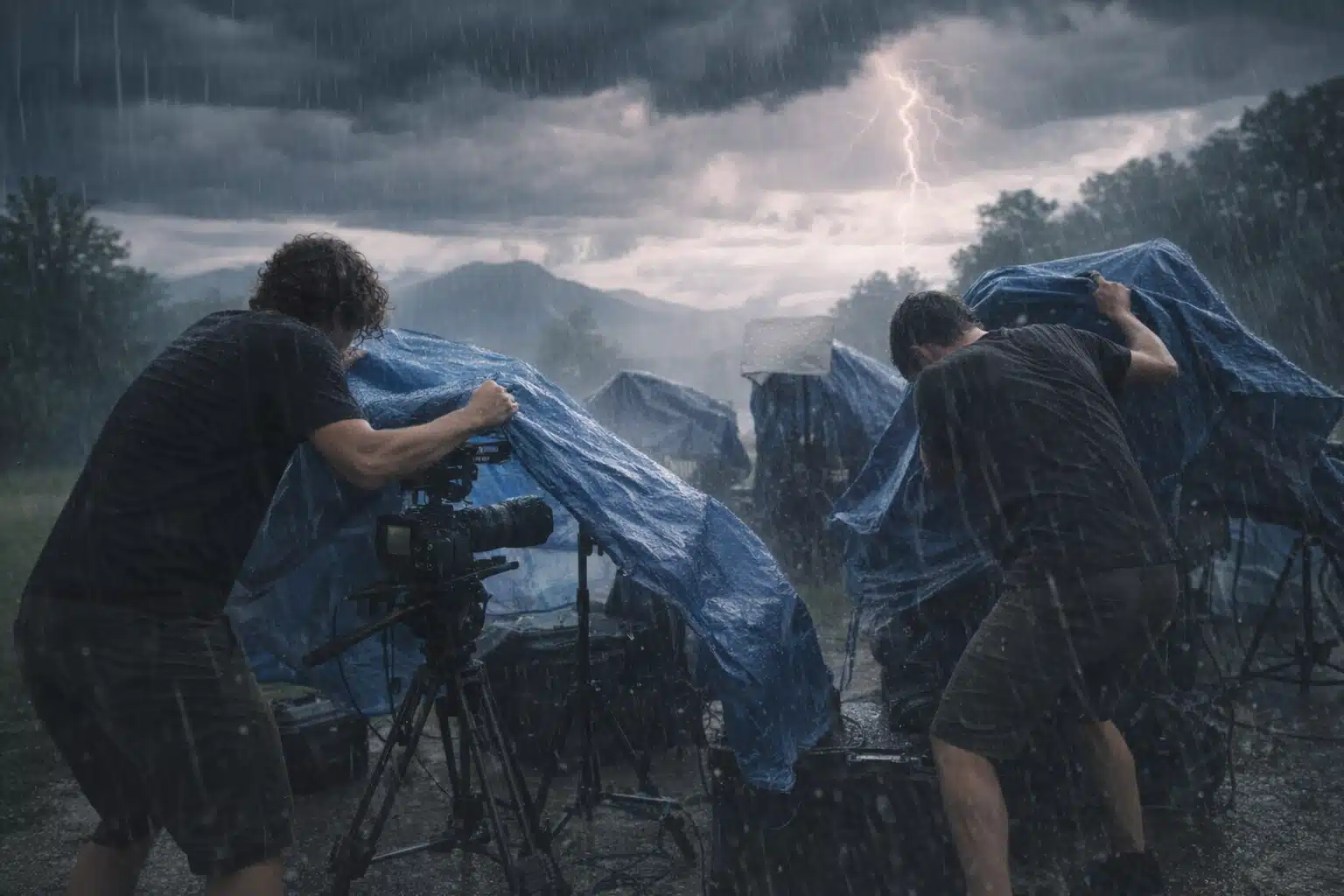
Denver's 300 sunny days can mislead video crews since afternoon thunderstorms arrive within 30 minutes during summer months. Colorado's high altitude and rapid temperature swings create unique challenges that require specific planning and equipment adjustments.
- Morning shoots between 6 a.m. and 11 a.m. offer the calmest conditions and lowest storm probability. Fall is the strongest filming season with clear skies and golden aspen colors.
- High altitude means stronger UV exposure, harsher shadows, and faster battery drain in cold weather. Crews should carry double batteries and use ND filters aggressively.
- Weather can become a creative advantage when planned for - storm clouds add drama to corporate videos and fresh snow creates natural contrast. Local crews bring forecasting knowledge and backup planning that keeps productions on track.
Colorado weather presents unique challenges for outdoor video production. Despite Denver's 300 sunny days annually, afternoon thunderstorms can develop within 30 minutes during summer months, bringing hail and rain. Crews filming in the morning may face completely different conditions by afternoon, requiring flexible scheduling, backup plans, and weather monitoring to protect equipment and maintain production timelines.
Denver sees roughly 300 sunny days a year, but that statistic misleads anyone planning outdoor video shoots here. Afternoon thunderstorms roll in from the foothills between June and August, sometimes within 30 minutes. A crew filming a brand video in Wash Park at 1 p.m. can face clear skies, then hail by 3 p.m. This post breaks down how Colorado weather shapes production days, and what Denver businesses can do to protect their footage, budget, and schedule.
Why Colorado Weather Complicates Outdoor Video Shoots
Colorado sits at high altitude with a semi-arid climate. That combination creates conditions most out-of-state crews underestimate.
Denver rests at 5,280 feet. Thinner air means stronger UV exposure and harsher midday sun. Shadows fall darker and highlights blow out faster than at sea level.
The state also holds a record for temperature swings. A single April day can start at 28°F and hit 65°F by afternoon. Talent comfort, equipment behavior, and lighting all shift with those swings.
The Big Three Weather Risks for Denver Shoots
- Afternoon convective storms — common June to August, usually after 1 p.m.
- Wind — Chinook winds off the Front Range can hit 40+ mph, wrecking audio and toppling light stands.
- Rapid light changes — high-altitude clouds move fast, breaking exposure continuity between takes.
Best Times of Day for Outdoor Video Shoots in Denver
Morning holds the calmest, most predictable conditions across most of the year. Storms build in the afternoon, and wind picks up as the ground heats.
Book exterior filming between 6 a.m. and 11 a.m. during summer months. This window gives you soft directional light and lower storm probability.
Seasonal Light and Weather Patterns
Spring (March–May): Unpredictable. Snow one day, 70°F the next. Late snow squalls can cancel a shoot with little warning.
Summer (June–August): Reliable mornings, stormy afternoons. Plan wrap times before 1 p.m. when skies threaten.
Fall (September–October): The strongest season for filming. Golden aspen color near Evergreen and Kenosha Pass peaks late September. Skies stay clear and winds calm.
Winter (November–February): Cold but often bright. Snow reflects light beautifully, but batteries drain fast below freezing.
How to Prepare for Weather on a Denver Outdoor Shoot
Preparation separates a smooth shoot day from a lost one. Follow these steps before any exterior production.
- Check three forecasts, not one. Compare NOAA, a radar app, and a mountain-specific source. Front Range weather varies block to block.
- Build a weather buffer day. For multi-day projects, hold one flex day for reshoots.
- Scout a covered backup location. A garage, covered patio, or warehouse keeps the day productive if rain hits.
- Pack for temperature swings. Layers for talent and crew prevent shivering hands ruining handheld shots.
- Secure every stand. Sandbag lights and diffusion frames against sudden Chinook gusts.
Equipment Adjustments for Colorado Conditions
Altitude and dry air change how equipment performs. Cameras and batteries need specific care here.
- Carry double the batteries. Cold drains lithium cells fast. Keep spares in an interior pocket for warmth.
- Use ND filters aggressively. High-altitude sun demands strong neutral density to hold cinematic apertures.
- Bring wind protection for audio. A dead cat windscreen becomes mandatory on any breezy day.
- Watch for lens condensation. Moving from a heated van into 20°F air fogs glass instantly. Acclimate slowly.
Turning Colorado Weather Into a Creative Advantage
Weather threatens a shoot only when it surprises you. Planned for, it becomes footage no studio can fake.
Dramatic storm clouds over the Front Range give a corporate video real scale. We have used a rolling thunderhead behind a founder interview to add tension and place.
Fresh snow on brick buildings in RiNo creates contrast that flat gray days cannot match. Fall backlight through aspen leaves turns a simple walking shot into a signature frame.
Real Scenarios We Plan Around
Event coverage in summer: Outdoor concerts and festivals peak during storm season. We stage covered camera positions and waterproof key equipment before doors open.
Brand shoots at altitude: Filming near Red Rocks or Lookout Mountain means stronger UV and faster light shifts. We schedule hero shots for the first two hours of daylight.
Winter product filming: Snow acts as a giant reflector. We use it to fill shadows on faces without hauling extra bounce boards.

 Posted on Google
Professional Videography vs DIY in Colorado Conditions
A phone can capture a clear morning. It cannot recover a shoot when clouds break exposure mid-scene or wind buries dialogue.
A trained crew reads the sky, adjusts settings between takes, and protects gear from moisture and gusts. That difference shows most on unpredictable days.
What a Local Crew Brings
- Front Range forecasting knowledge built from years of shooting here.
- Backup planning that keeps a shoot moving when weather turns.
- Insurance and equipment protection for expensive cameras in hail or rain.
- Continuity control so morning and afternoon footage matches in the edit.
Conclusion
Colorado weather rewards crews who plan for it and punishes those who ignore it. Morning scheduling, backup locations, and altitude-ready equipment keep outdoor video shoots on track across every season. Expo Productions plans Denver shoots around real Front Range conditions, not wishful forecasts.
Call or text us at 303‑775‑0248, email matthew@expoproductions.com, or visit https://expoproductions.com to plan your next outdoor production.
Sources
- National Weather Service – Denver/Boulder Forecast Office
- National Weather Service – Thunderstorm Safety
- National Weather Service – Denver/Boulder, Colorado
