
Understanding Video Production Contracts: What Denver Clients Need to Know
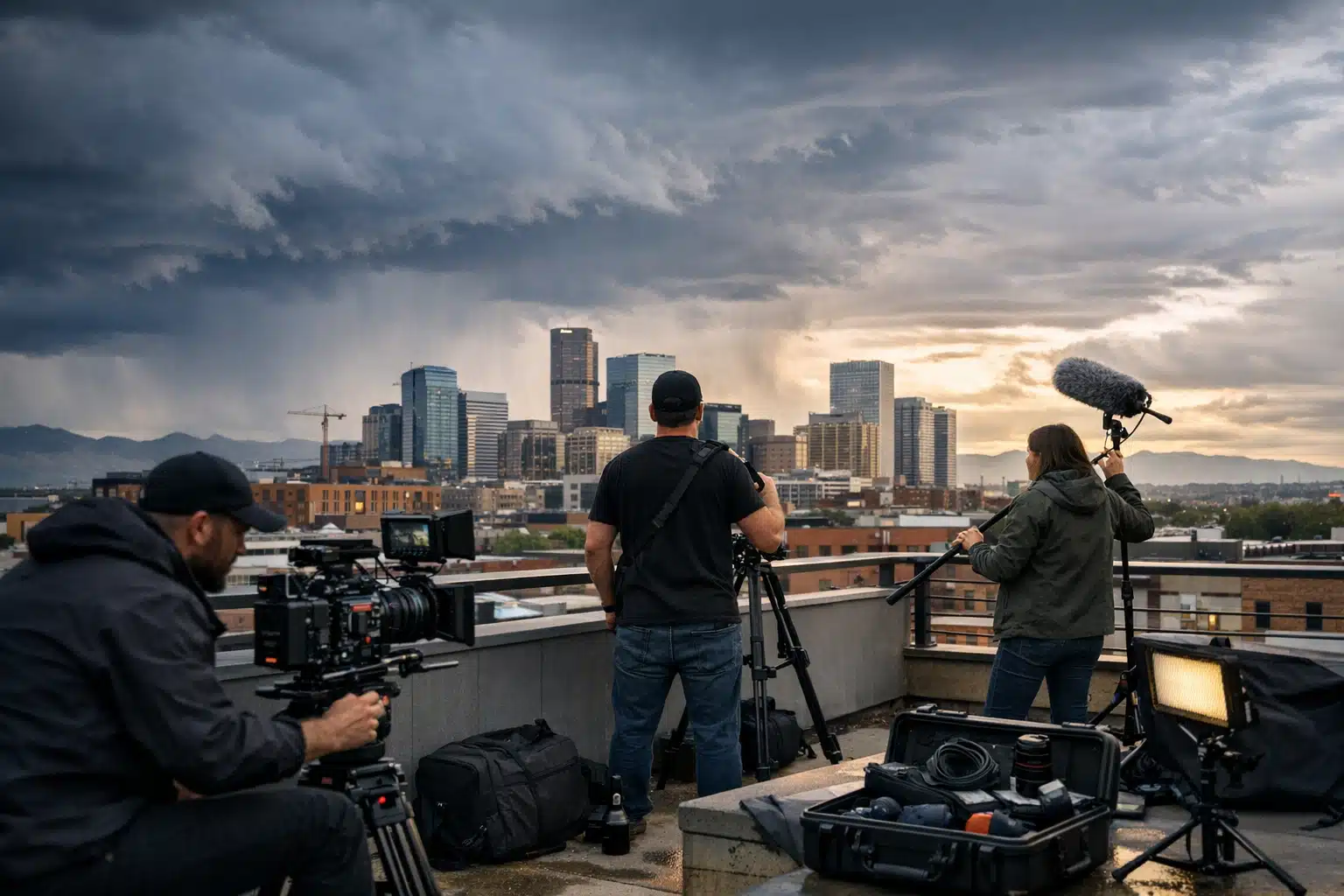
Denver businesses are booking more video work than ever, but many clients sign vague agreements or skip written terms entirely. Strong video production contracts prevent disputes by defining scope, payment, ownership, and weather-related contingencies.
- A clear scope section should list exact deliverables, runtimes, formats, shoot days, and included services like drone footage or music licensing to avoid budget overruns.
- Colorado weather forces frequent reschedules, so contracts need weather clauses covering trigger conditions, reschedule windows, and cost handling for outdoor shoots.
- Ownership terms often misunderstood - paying for a video does not always mean owning raw footage, and usage rights may differ between organic posts and paid ads.
A video production contract is a legal agreement between a client and a production company that outlines project scope, deliverables, timelines, payment terms, and usage rights. Denver businesses need these contracts to protect their investment, clarify ownership of footage and final edits, prevent scope creep, and establish clear expectations for both parties throughout the production process.
Why a Video Production Contract Matters More in Denver Than You Think
Denver businesses booked more branded video work in the past three years than ever before. Marketing budgets shifted toward short-form video, event recaps, and founder stories.
That growth created a problem. Many first-time clients sign vague agreements or skip written terms entirely.
Strong video production contracts prevent the disputes that follow. They define scope, payment, ownership, and what happens when a June hailstorm cancels your rooftop shoot in RiNo.
This post breaks down every clause a Denver client should read before signing. It draws on real situations from local shoots across the Front Range.
What a Video Production Contract Actually Covers
A video production contract is a written agreement between a client and a videographer. It sets the terms for the shoot, the edit, the payment, and the final footage rights.
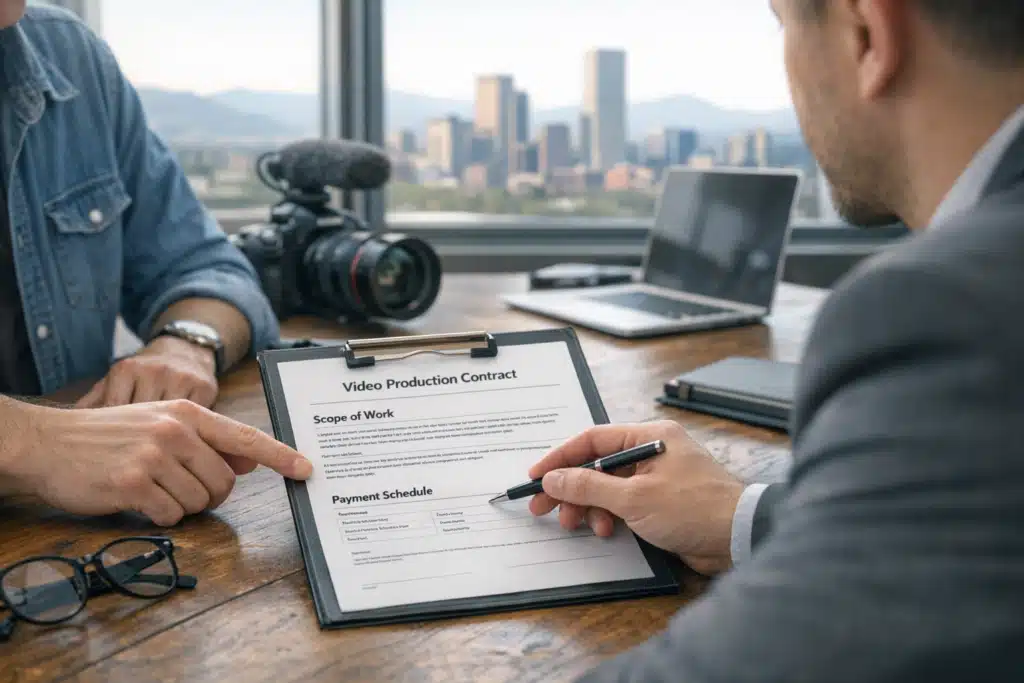
A weak contract lists a price and a due date. A strong one answers questions before they turn into arguments.
Here are the sections that carry the most weight for Denver work:
- Scope of work — exact deliverables, runtime, and versions
- Payment schedule — deposit, milestones, and final balance
- Revision limits — how many edit rounds are included
- Ownership and licensing — who owns the footage and final cut
- Weather and reschedule terms — a real concern in Colorado
- Cancellation policy — refunds and kill fees
Skip any of these and you invite confusion later. Each one solves a problem we have watched hurt local clients.
Scope of Work: The Clause That Prevents Scope Creep
The scope section defines exactly what you receive. A vague scope is the top reason projects run over budget.
Compare two lines from a real contract format:
- Vague: “One promotional video for social media.”
- Clear: “One 60-second brand film, plus three 15-second vertical cuts for Instagram Reels, filmed in one day at the client’s LoDo office.”
The second version leaves no room for guessing. If the client later wants a 90-second version, both sides know that falls outside the original agreement.
What to List in the Scope Section
- Number of final videos and their exact runtime
- Aspect ratios and platform formats
- Number of shoot days and locations
- Whether music licensing, captions, or graphics are included
- Named crew roles, such as a second camera or drone operator
A restaurant client once assumed drone footage came standard. It did not appear in the scope. A clear list would have caught that before the shoot day.
Payment Terms Denver Clients Should Expect
Most video production contracts in Denver use a deposit-and-balance structure. A common split is 50 percent to book the date and 50 percent on delivery of the final files.
Larger projects use three payments. One at booking, one after the shoot wraps, and one at final approval.
Watch for these payment details in any agreement:
- Deposit amount and whether it is refundable
- Due dates tied to clear milestones
- Late fees and what triggers them
- Rush charges for tight turnarounds
A deposit protects the videographer’s booked date. It also confirms the client is committed to the schedule.
Weather and Reschedule Clauses for Colorado Shoots
Colorado weather forces more reschedules than clients expect. Denver averages sudden afternoon storms in summer and heavy snow into April.
A strong contract names a weather policy for outdoor shoots. Without one, both sides argue over who pays for a lost crew day.
Good weather clauses cover three points:
- Trigger conditions — rain, high wind, or unsafe road ice
- Reschedule window — how many days to rebook without penalty
- Cost handling — whether the client owes a partial crew fee
We shot a brand film at Red Rocks that got pushed twice by lightning warnings. Because the contract named a free reschedule window, nobody lost money or trust.
Golden Hour and Permit Timing
Denver’s high altitude sun sits harsh at midday. Many outdoor shoots aim for the softer light near sunrise or sunset.
Contracts for public locations should mention permit responsibility. Filming at Washington Park or on the 16th Street Mall may require a city permit. The agreement should state who secures and pays for it.
Ownership and Usage Rights: Who Owns Your Video?
Ownership is the clause clients understand least. Paying for a video does not always mean you own every file.
Two terms matter here:
- Final deliverables — the finished, exported videos you receive
- Raw footage — the unedited clips shot on camera
Most Denver videographers grant full usage rights to the final videos. Raw footage stays with the producer unless the contract says otherwise.
If you want the raw files, ask for them in writing before signing. Some studios charge an extra fee to hand over project files and raw clips.
Usage Rights for Ads Versus Organic Posts
Some contracts limit how footage is used. A video licensed for organic social posts may carry different terms than a paid ad campaign.
Event planners should check this closely. Footage of a sponsored gala may involve talent releases from featured speakers or performers.

 Posted on Google
Revision Rounds and Approval Steps
Revision limits keep an edit from dragging for weeks. Most Denver agreements include two or three revision rounds.
A revision round means one consolidated set of notes, not endless one-off changes. Clear language here saves both sides frustration.
Ask these questions before signing:
- How many revision rounds are included?
- What counts as a revision versus a new edit?
- What is the cost per extra round?
- How many days do I have to submit notes?
One tech client sent feedback across nine separate emails. Their contract defined a round as one grouped list. That clause kept the project on budget.
Cancellation and Kill Fees
Cancellation terms protect both parties when plans change. A kill fee compensates the crew when a client cancels close to the shoot date.
A fair structure ties the fee to timing:
- Cancel 14+ days out: deposit refunded minus prep costs
- Cancel 7 to 13 days out: deposit kept
- Cancel within 6 days: deposit plus partial crew fee
Crews book dates weeks ahead and turn down other work. A late cancellation costs the videographer real income, which the fee offsets.
A Quick Checklist Before You Sign
Run any video production contract past this list. If a line is missing, ask about it before you commit.
- Are all deliverables listed with runtime and format?
- Is the payment schedule tied to clear milestones?
- Does a weather clause cover outdoor Denver shoots?
- Is footage ownership stated plainly?
- Are revision rounds and extra costs defined?
- Is the cancellation policy fair to both sides?
A good videographer welcomes these questions. Clear terms build trust and set the project up to run smoothly.
Work With a Denver Videography Team That Puts It in Writing
A solid contract protects your budget, your timeline, and your footage. It matters most when Colorado weather or shifting scope tests the plan.
Expo Productions writes plain-language agreements for every Denver videography project. Every client knows the scope, cost, and rights before a camera rolls.
Call or text us at 303-775-0248, or email matthew@expoproductions.com to start your next video project with clear terms and no surprises.
Sources
- Denver.gov – Denver Film and Permitting
- National Weather Service – Denver/Boulder Forecast Office
- U.S. Copyright Office – What Is Copyright
